
Fire Door Closer Mistakes Contractors Make: 3 Ready Replacement Units

For commercial fire-rated doors, the closer must be listed for the assembly, sized to the door’s width and weight, and set to close and latch positively every time. Surface, concealed, and floor closers all qualify when specified correctly. Electrified hold-open units are the only compliant way to keep a fire door open during business hours. Everything else, including propped doors and painted-over labels, fails inspection.
TL;DR:
- Surface-mounted closers are best suited for high-traffic, heavy fire-rated doors to ensure reliable self-closing and latching.
- Proper sizing according to door weight and width, along with no field modifications, is essential to meet NFPA 80 and ANSI/BHMA standards.
- Electromechanical hold-open systems are the only approved method to keep fire doors open during business hours, with strict wiring and listing requirements.
- Regular documented inspections are mandatory, with some jurisdictions requiring quarterly checks; neglecting labels or improper adjustments lead to failed inspections.
- Ordering complete, code-compliant units and avoiding shortcuts like painted labels or unlisted field modifications prevent costly delays and safety violations.
Table of Contents
- What Types of Fire Door Closers Should You Specify?
- What Do NFPA 80 and ANSI/BHMA A156.4 Require?
- How Do You Size and Specify the Right Closer?
- How Do You Install and Maintain a Fire Door Closer Correctly?
- How Ufdoors Supports Fast, Compliant Door Replacement
- What Contractors Get Wrong About Fire Door Closers
- Get a Compliant Door Unit Fast
- Where to Verify Closer Standards and Listings
- Sources
- FAQ
What Types of Fire Door Closers Should You Specify?
Every fire door closer on the market falls into one of five families, and picking the wrong one is the most common reason a spec gets rejected during plan review.
Surface-mounted closers are the workhorses. Rack-and-pinion models handle high-traffic entries and heavy doors because the piston engages a full-width pinion gear, spreading force evenly and resisting wear. Cam-action closers cost less and work fine on lighter interior doors, but they concentrate force on a smaller cam surface, so they wear faster under repeated heavy use. If you’re specifying for a school corridor or hospital ward with hundreds of daily cycles, rack-and-pinion is the safer bet.
Concealed closers hide in the door or frame, either as an in-door unit, an in-frame overhead model, or a fully concealed transom-style closer. Facility owners request these for lobbies, executive suites, and anywhere vandalism or aesthetics matter. The tradeoff is service access. A concealed closer that fails means opening up the door or frame, not just swapping an exposed arm.
Floor closers sit in a recessed floor pan and handle the heaviest, tallest doors, including double-acting doors in commercial kitchens and loading areas. They’re overkill for a standard office door but often the only practical choice for oversized or double-action fire-rated openings.
Electrified closer/holder combinations and magnetic hold-open systems let a door stay open during normal operating hours and close automatically the instant a fire alarm or smoke detector trips. Single-point magnets work on standard swing doors; multi-point systems coordinate double doors so both leaves release together. These units run on low-voltage wiring tied into the building’s fire alarm control panel, and the LCN fire and life safety catalog describes both single-point and multi-point configurations built specifically for this release-on-alarm function.
Delayed-action closers hold the door open briefly, typically a few seconds, before closing, which matters in healthcare admission areas and other spaces where staff need extra time to move carts or gurneys through. These are permitted, but only with documentation showing the delay setting doesn’t compromise the door’s self-closing requirement.
A quick reference for matching type to application:
- Surface rack-and-pinion: high-cycle entries, heavy commercial doors
- Surface cam-action: light-duty interior doors, lower-traffic areas
- Concealed (in-door/in-frame): lobbies, aesthetic-sensitive or anti-vandal locations
- Floor closers: oversized, double-acting, or unusually heavy doors
- Electrified closer/holder: corridors and doors that must stay open during business hours
- Delayed-action: admission areas and workflows needing a controlled pause before closing
European and UK product lines classify closers by an EN power-size scale tied to door width and mass, a useful reference point even for American specifiers working on international projects, according to guidance from FireSealsDirect.
What Do NFPA 80 and ANSI/BHMA A156.4 Require?
Two standards govern almost every fire door closer decision in the United States, and missing either one is the fastest way to fail an inspection.
NFPA 80 requires fire door assemblies to be self-closing and self-latching, full stop. That means the door closes fully from any open position and the latch engages without anyone touching it. The standard also mandates regular documented inspections for most fire door assemblies, with written records kept on file and available for the authority having jurisdiction.
ANSI/BHMA A156.4-2024 governs the closer hardware itself. It requires closers used on labeled fire-rated openings to carry listing or labeling from a nationally recognized independent testing laboratory, and it sets operational and cycle-test criteria that surface, concealed, and floor closers must meet before they can go on a labeled door. The standard also recommends follow-up factory testing for certain product lines, according to the ANSI blog’s summary of the 2024 revision.
Pro Tip: A closer that isn’t listed for the specific door and frame combination it’s installed on doesn’t count as compliant, even if the closer itself carries a UL label. UL 10C compatibility runs on the assembly, not just the part.
Field modifications void listings faster than almost anything else on a jobsite. Drilling extra holes, welding brackets, or painting over the manufacturer’s label are all common shortcuts that strip a closer of its listed status, and inspectors flag them on sight, per selection guidance from US Made Supply.
Hold-open devices carry their own rule set. They must be listed for fire door use and wired to release automatically on activation of the fire alarm or smoke detection system. A friction arm propped with a hook, or a magnet with the alarm connection jumped out during a renovation, is an automatic inspection failure and, more importantly, a life-safety gap.
Common reasons fire door closer inspections fail:
- Missing or painted-over manufacturer label
- Door fails to latch fully on the first swing
- Hold-open device not tied to alarm system
- Field-modified closer body or mounting plate
- Missing or incomplete annual inspection paperwork
Inspection cadence isn’t identical everywhere. Some jurisdictions outside the U.S. require quarterly closer checks in common areas of taller residential buildings, while NFPA 80 in the U.S. generally calls for annual written documentation, a distinction worth confirming with local code officials before assuming one schedule applies everywhere, based on comparisons from FireSealsDirect.
How Do You Size and Specify the Right Closer?
Getting the spec right the first time avoids the two most expensive outcomes on a jobsite: a rejected inspection and a return trip to swap hardware. Work through it in order.
- Record the door data. Note width, height, weight, fire rating, and swing direction. These four numbers drive every downstream decision, including which power size range applies.
- Check the power-size table. Manufacturers publish sizing charts (and EN power-size equivalents for international projects) that match closer spring power to door width and weight. Undersizing means the door won’t close against wind pressure or stack pressure in a stairwell; oversizing means it slams and fails ADA force limits.
- Pick the grade. ANSI/BHMA Grade 1 closers are built for heavy-traffic commercial and institutional doors and hold up longer under repeated cycling. Grade 2 is acceptable for lower-traffic interior doors where budget matters more than cycle life, though specification guides note that Grade 1 with a full adjustable valve set reduces long-term service calls in critical locations.
- Specify the valve set. Latch speed, sweep speed, and backcheck should all be independently adjustable. This is what lets you meet both the positive-latching requirement and the ADA’s maximum opening-force limits on the same door.
- Decide on electrified hold-open. If the door needs to stay open during business hours, this isn’t optional, it’s the compliant path. Specify the integration point with the fire alarm control panel and confirm the hold-open device itself carries a listing for fire door use.
- Finalize ordering notes. Confirm the mounting template matches your frame prep, request paperwork proving listing compatibility with your specific door and frame, and instruct installers in writing to keep the manufacturer’s label untouched.
Pro Tip: Order one extra template sheet with every closer. Field crews lose the paper template constantly, and re-drilling from a photocopy invites the kind of mounting error that shows up as a callback three months later.
Anyone specifying hardware across a mixed-material building should also cross-reference a broader commercial door hardware guide covering hinges and locksets alongside closers, since fire-rated assemblies typically need all three coordinated.
How Do You Install and Maintain a Fire Door Closer Correctly?
Installation errors and deferred maintenance cause more failed inspections than bad specs do. The fix starts with the template.
Install strictly per the manufacturer’s mounting template. Never drill extra holes, never weld a bracket, and never modify a listed arm or body to fit an odd frame condition. Any of those actions can void the listing outright. Keep the manufacturer’s label fully visible; painting over it during a renovation is one of the most common and most avoidable inspection flags.
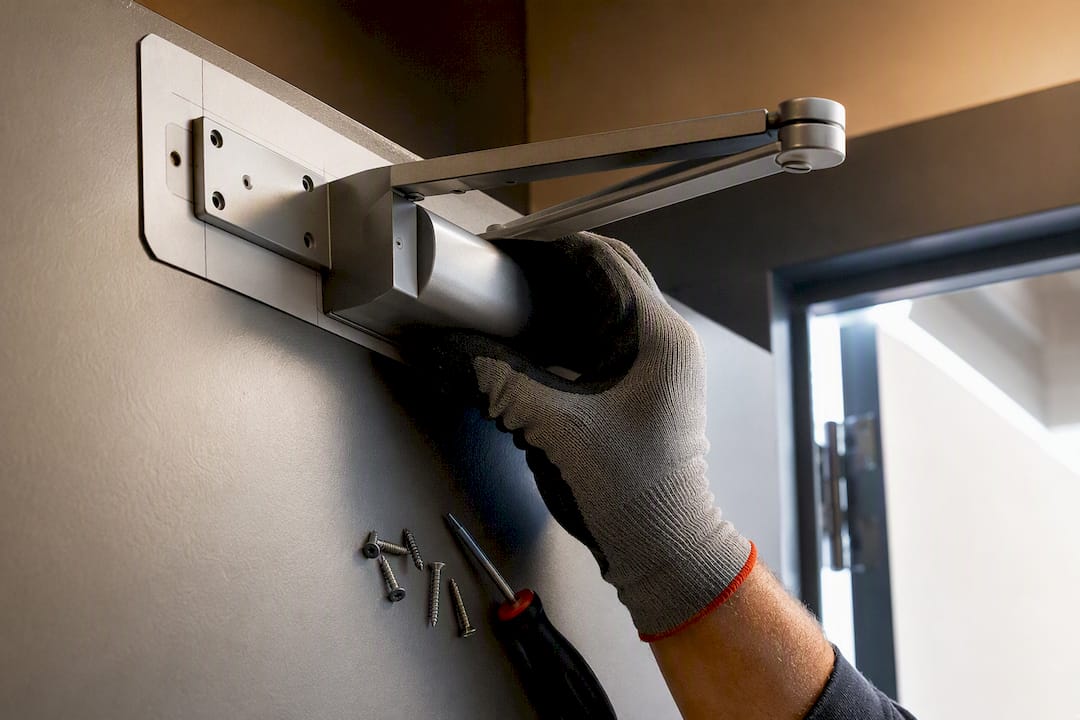
Adjustment happens in three stages: sweep speed controls how fast the door travels through most of its arc, latch speed controls the final few degrees where the door must click shut, and backcheck cushions the door against violent full-open swings. Balance all three against ADA opening-force limits, since a closer set too aggressively for fast latching can exceed the force a person with limited mobility can safely push against.
Watch for these field symptoms and what they usually mean:
| Symptom | Likely cause | Typical fix |
|---|---|---|
| Door doesn’t latch | Latch speed set too slow, or worn valve | Readjust valve; replace if leaking |
| Door slams | Backcheck or sweep set too fast | Readjust valve set |
| Fluid leaking from body | Failed seal or cracked housing | Replace closer unit |
| Bent or loose arm | Impact damage or worn linkage | Replace arm; inspect mounting plate |
| Hold-open doesn’t release | Wiring fault or non-listed device | Test alarm circuit; replace if unlisted |
Hydraulic leaks and worn valves are almost always a replace-the-unit situation rather than a repair, since internal seals aren’t field-serviceable on most listed closers. A bent arm can sometimes be swapped without replacing the whole body, but check the mounting plate for stress cracks first.
Maintenance documentation matters as much as the physical fix. NFPA 80 requires regular written inspections for most assemblies, and some facilities layer in quarterly visual checks for high-traffic doors. Keep every inspection report, service ticket, and parts-replacement record in a single file tied to that door’s identification number. When the authority having jurisdiction asks for proof, a scattered paper trail is almost as bad as no inspection at all. If a closer shows repeated leaking, won’t hold adjustment, or the door assembly itself is compromised, that’s the point to call for a professional repair visit rather than attempting another field fix.
How Ufdoors Supports Fast, Compliant Door Replacement
A supplier might manufacture and install fire-rated steel doors, frames, and hardware, with a track record built across a large client base. When a closer or door assembly is too far gone to service, ordering a complete unit is often faster and cheaper than piecing together a repair.
- Expedited delivery options on standard commercial door units
- Installation services available in addition to parts supply
- Inspection and maintenance support aligned with NFPA 80 documentation requirements
Ordering a complete unit makes sense when the frame is out of square, the existing door has been field-modified in ways that already voided its listing, or the closer failure is the second one on the same opening in two years. Retrofitting a new closer onto sound, unmodified hardware still makes sense otherwise. Understanding how fire-rated door ratings map to your building’s occupancy helps confirm which rating you need before ordering.
What Contractors Get Wrong About Fire Door Closers
The recurring failure I see across specification packages isn’t ignorance of NFPA 80. It’s shortcuts taken under deadline pressure. Wrong power sizes get ordered because nobody checked door weight against the sizing table. Labels get painted over during a repaint job because the crew doesn’t know what that label protects. Hold-open hacks, like a hook holding a door open in a corridor that’s supposed to close on alarm, show up constantly in older buildings retrofitted piecemeal over decades.
A short checklist prevents most of it: confirm the listing matches the door and frame, verify the power size against actual door weight, specify electrified hold-open wherever a door needs to stay open, and keep every inspection report on file. None of that is complicated. It’s just easy to skip when a job is behind schedule, and skipping it is exactly what shows up as a red tag six months later.
— Esteban
Get a Compliant Door Unit Fast
Some companies offer alternatives to waiting weeks on backordered hardware. When a closer fails inspection or a door assembly is too compromised to patch, they may ship a complete, code-ready unit with expedited delivery, and handle the installation, not just supply parts.
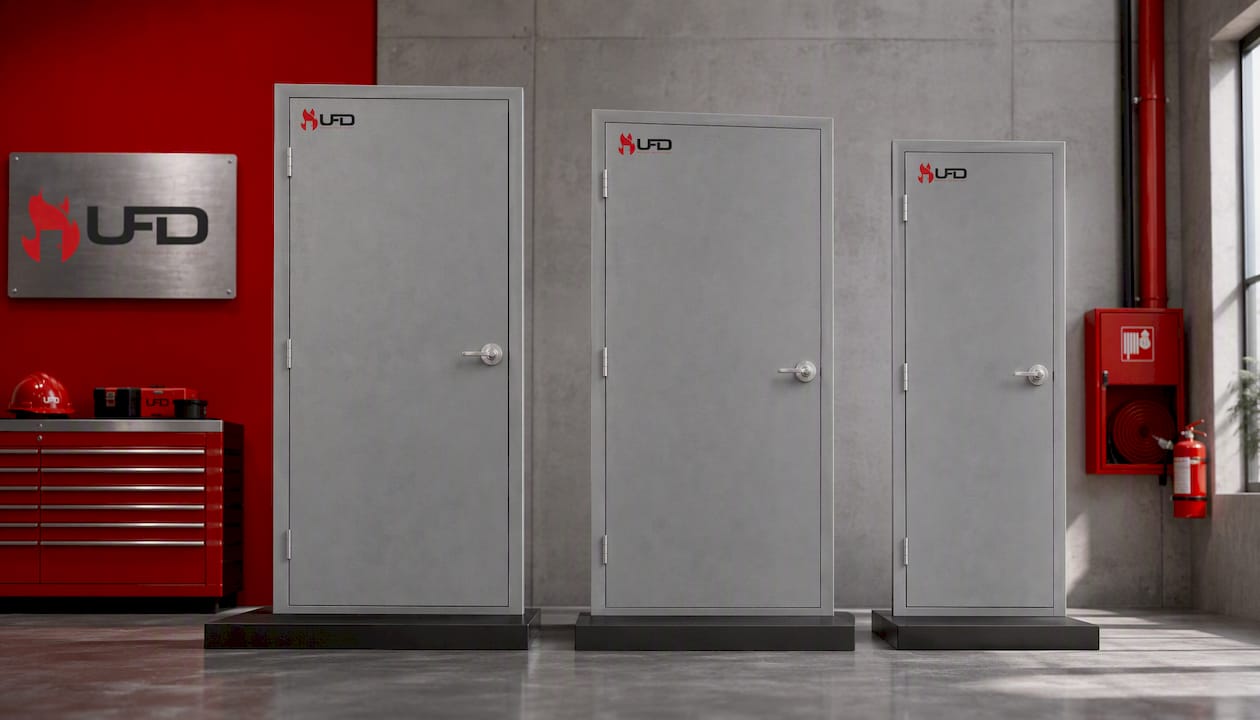
Three ready-to-order units cover the most common commercial replacement scenarios: the 28 x 84 steel door unit, the 30 x 84 steel door unit, and the 28 x 80 steel door unit, each arriving with self-closing hinges, a cylindrical lockset, and the frame already prepped. If you need a scheduled compliance check instead of a replacement, Ufdoors also runs fire door inspections that document exactly what NFPA 80 requires. Request a quote or schedule an inspection through Ufdoors to get a firm delivery date.
Where to Verify Closer Standards and Listings
Confirm specs directly against NFPA 80’s hardware requirements, the ANSI/BHMA A156.4-2024 update, and manufacturer fire-life-safety catalogs before finalizing any order.
Sources
- ANSI/BHMA A156.4-2024: Door Closers And Pivots - The ANSI Blog
- Fire Door Hardware and Closures | UpCodes
- LCN Fire and Life Safety Closers and Holders Catalog 009513
- Door Closer Selection Guide: Grade, ADA & Fire-Rated Specs | US Made Supply
- Fire Door Closers - FireSealsDirect
FAQ
Do fire doors need door closers?
Yes. NFPA 80 requires fire door assemblies to be self-closing and self-latching, and a listed closer is the mechanism that makes both happen automatically.
What are the main types of fire door closers?
The main types are surface-mounted (rack-and-pinion or cam-action), concealed, floor, and electrified closer/holder units, with delayed-action closers used in specific settings like healthcare admission areas.
What are the requirements for fire-rated door closers?
They must be listed or labeled by a recognized testing laboratory under ANSI/BHMA A156.4, sized correctly for the door’s weight and width, and installed without field modifications that could void the listing.
How often do fire door closers need to be inspected?
NFPA 80 generally requires regular written inspections in the U.S., though some jurisdictions outside the U.S. require quarterly checks in certain residential common areas.
Can I keep a fire door open during the day?
Only with a listed electrified hold-open device tied to the building’s fire alarm system; mechanical props or friction hacks are inspection failures and safety risks.