
Facility Managers: Same Day NFPA 80 Emergency Door Replacement

A failed or unlabeled fire door is a code violation the moment it stops closing and latching correctly. The only compliant response is immediate correction: secure the opening, document its condition, and either field-relabel it or order an expedited, code-matched replacement with professional installation and an acceptance test. NFPA 80 treats operational defects as something to fix without delay, not schedule for next quarter. Same-day and next-day replacement units exist for exactly this reason.
TL;DR:
- A fire door that fails inspection or shows damage must be secured immediately and either relabeled or replaced to maintain life safety.
- NFPA 80 mandates that operational defects be corrected without delay, with annual inspections and record retention for compliance.
- Providing precise wall and opening details upfront ensures same-day or next-day replacement without unnecessary delays.
- Correct installation, matching the assembly’s rating, and thorough documentation are essential to pass inspections and avoid future violations.
- Using stock units known to meet standards reduces logistical delays, but altering hardware or assembly outside its listing voids relabeling options.
Table of Contents
- What Do You Do Right Now for Emergency Door Replacement?
- What Does NFPA 80 Actually Require During an Emergency Repair?
- How Fast Can a Compliant Replacement Actually Happen?
- How Do You Verify and Document the Installation?
- What Specification Fields Prevent an Emergency Reorder?
- Why Speed and Documentation Both Matter Here
- How Ufdoors Handles Emergency Door Replacement Requests
- Sources
- FAQ
What Do You Do Right Now for Emergency Door Replacement?
A fire door that won’t latch, has a missing label, or shows fire damage is not a maintenance backlog item. It’s an active life-safety gap. The checklist below moves you from discovery to a scheduled fix in the same shift.
- Secure the opening. If the door can’t self-close and positive-latch, post someone or use an approved temporary barrier while you arrange permanent correction. Never block or wedge the door open as a “fix.”
- Document everything. Photograph the label location (or its absence), hinge and frame condition, and any visible damage. Note who found the issue and when. This record protects you during the inspection that follows.
- Run the triage decision. If the assembly is unmodified and otherwise compliant but the label is missing or unreadable, field relabeling by an authorized agency may resolve it. If hardware has been swapped, the frame is damaged, or the door has been undercut or drilled outside its listing, replacement is the only path. Field-labeling remains valid only when the assembly hasn’t been altered in ways that void the listing.
- Order the correct assembly. Pull the required rating from the wall type, not from the door you’re removing. Confirm slab size, frame type, and hardware prep before you place the order, not after delivery.
- Schedule installation and the acceptance test together. Notify your inspector or authority having jurisdiction if your local code requires it, and don’t consider the job closed until the acceptance test is signed off.
Pro Tip: Keep a phone folder of label photos and inspection dates for every rated opening in the building. When something fails, you’ll have baseline documentation in seconds instead of scrambling through paper logs.
What Does NFPA 80 Actually Require During an Emergency Repair?
NFPA 80 isn’t a suggestion framework. It sets specific, checkable obligations that determine whether your “temporary fix” holds up during the next inspection.
- An acceptance test is required when a fire door assembly is first installed, and that applies to emergency replacements the same as new construction.
- Assemblies need inspection and testing at least annually, with additional inspection required after any maintenance or repair work.
- Records must be retained: inspection records for a set period, acceptance test documentation for the life of the assembly.
- Operational defects, such as a door that won’t close or latch, must be corrected without delay rather than logged for a future work order.
NFPA 80 spells out these intervals and testing triggers directly, and inspectors will ask for the paperwork, not just a visual confirmation that the door looks fine.
Labels matter more than most property teams assume. The label is the only field evidence that a door, frame, and hardware combination was tested as an assembly. A missing or painted-over label doesn’t automatically mean the door failed. It means the door can’t be verified, and verification is what the inspector is checking. Field relabeling by an authorized agency can restore compliance on an unmodified assembly, but once hardware has been changed or the door altered outside its listing, relabeling won’t hold.
Rating selection follows the same logic. The required fire-resistance rating comes from the wall assembly and occupancy tables in the IBC, not from whatever rating happened to be on the door you’re replacing. Ordering to match the old door instead of the wall is one of the most common causes of costly reorders.
How Fast Can a Compliant Replacement Actually Happen?
A same-day or next-day timeline is realistic, but it depends on both sides doing their part before the crew shows up.
- Order cutoff and inventory check: confirming stock on the exact slab size and prep type early in the day is what makes same-day delivery possible.
- What you provide: site access windows, the wall’s fire-resistance rating, exact opening dimensions, and photos of the current condition.
- What the installer handles: matching the assembly to the opening, installing listed hardware to spec, and running the operational tests before leaving.
- AHJ notice: some jurisdictions expect notification before emergency work; others allow the repair to proceed with follow-up filing. Confirm this before, not after, the crew arrives.
- Common blockers: uncertain listing status, hardware that doesn’t match the door’s listing, or a wall rating nobody confirmed. Resolving these upfront during the order call, not on site, is what keeps the schedule intact.
How Do You Verify and Document the Installation?
Getting the door installed is only half the job. Closing out the compliance record is what actually protects you at the next inspection.
- Verify the new assembly’s label and frame match the specified rating, then check anchorage, clearances, and gasketing.
- Install all hardware specified in the listing, positive-latching hardware and self-closing devices included, and run repeated close-and-latch cycles until they’re consistent.
- Test hold-open release mechanisms and, for paired doors, confirm the coordinator sequences both leaves correctly.
- Hand over the acceptance test record, inspection report, label photos, and a signed repair log for storage with the building’s life-safety files.
The NFPA-based inspection checklist covers exactly these operational tests, and using it as your closeout script keeps nothing off the record. If the assembly can’t be returned to its listed condition during repair, stop and document that replacement is the only remaining option.
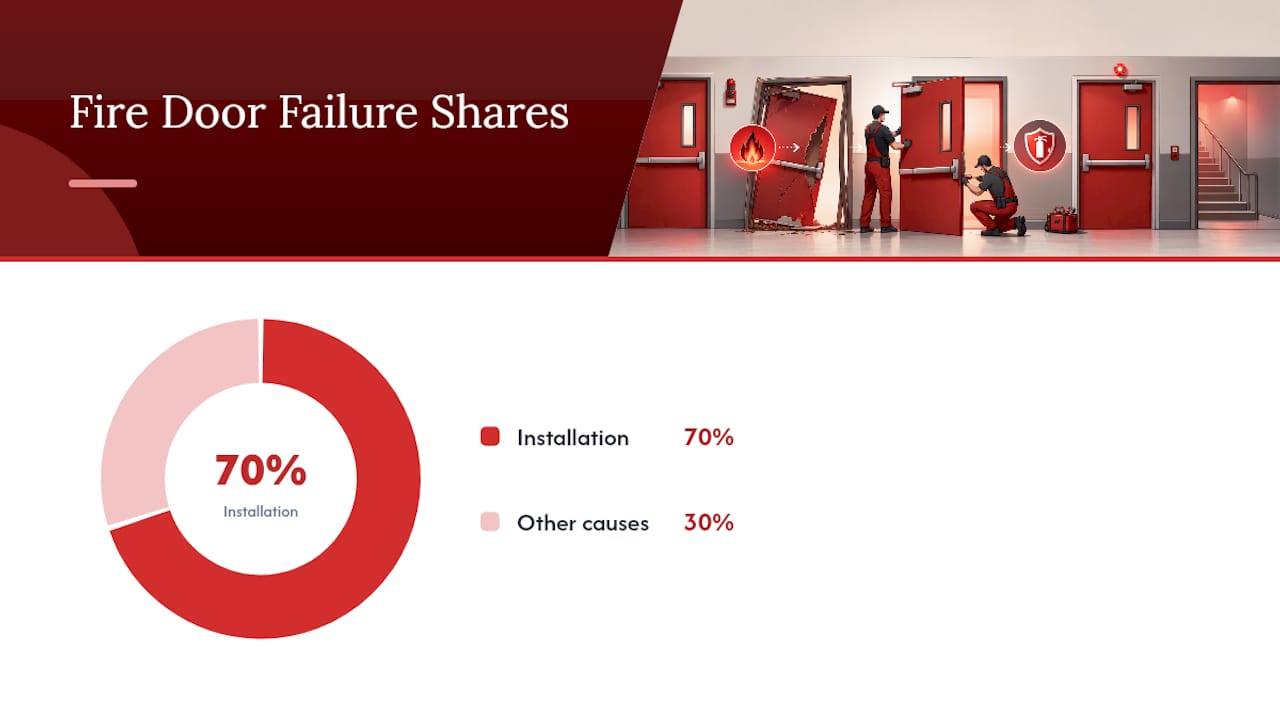
Pro Tip: Nearly 70% of fire door failures trace back to installation or maintenance errors, not the door product itself. A door installed correctly the first time is your cheapest insurance policy.
What Specification Fields Prevent an Emergency Reorder?
Getting the order right the first time is the difference between a same-day fix and a second emergency call next week.
- Confirm the hourly rating from the wall assembly, cross-checked against IBC occupancy tables, before you specify anything else.
- Provide exact slab size, frame type (welded or knock-down), and hinge/closer prep (cylindrical or mortise), since mismatched prep is one of the most common install-day delays.
- Note any glazing allowance if the opening requires vision lites within the listing.
- Specify the UL or listing documentation and required hardware types, including self-closing devices and positive-latching hardware, plus finish and protection instructions for the shipment.
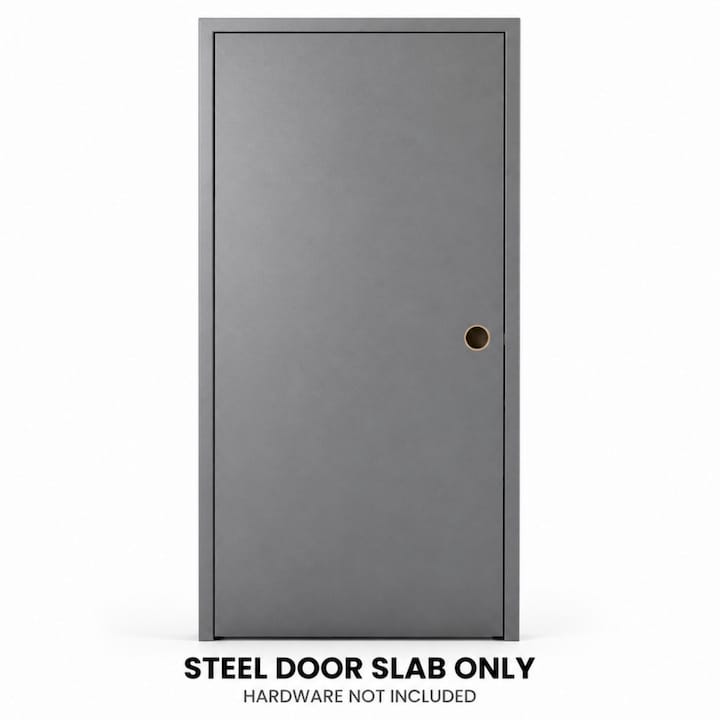
- For in-stock emergency options, the 30 x 80 steel door slab with single cylindrical prep, 20 gauge, 90-minute fire-rated covers most standard cylindrical-lock openings, while the 36 3/4 x 79 1/4 mortise-prep slab fits openings built around mortise hardware.
Why Speed and Documentation Both Matter Here
Fix-now priorities in this business come down to three things: the correct rating, professional installation, and a signed acceptance test. Skip any one of those and you haven’t solved the problem, you’ve deferred it. That combination of an in-stock replacement SKU and clean documentation is what keeps an emergency job from becoming a second emergency.
— Esteban
How Ufdoors Handles Emergency Door Replacement Requests
When a fire door fails inspection or gets damaged beyond repair, the fastest path back to compliance is a supplier that can deliver, install, and document the fix in one motion. Some suppliers run same-day and next-day delivery on in-stock 90-minute, 20-gauge units, backed by professional installation crews and inspection or repair services for openings that just need correction rather than full replacement. Such services have supported many clients who couldn’t afford to wait on a standard lead time.
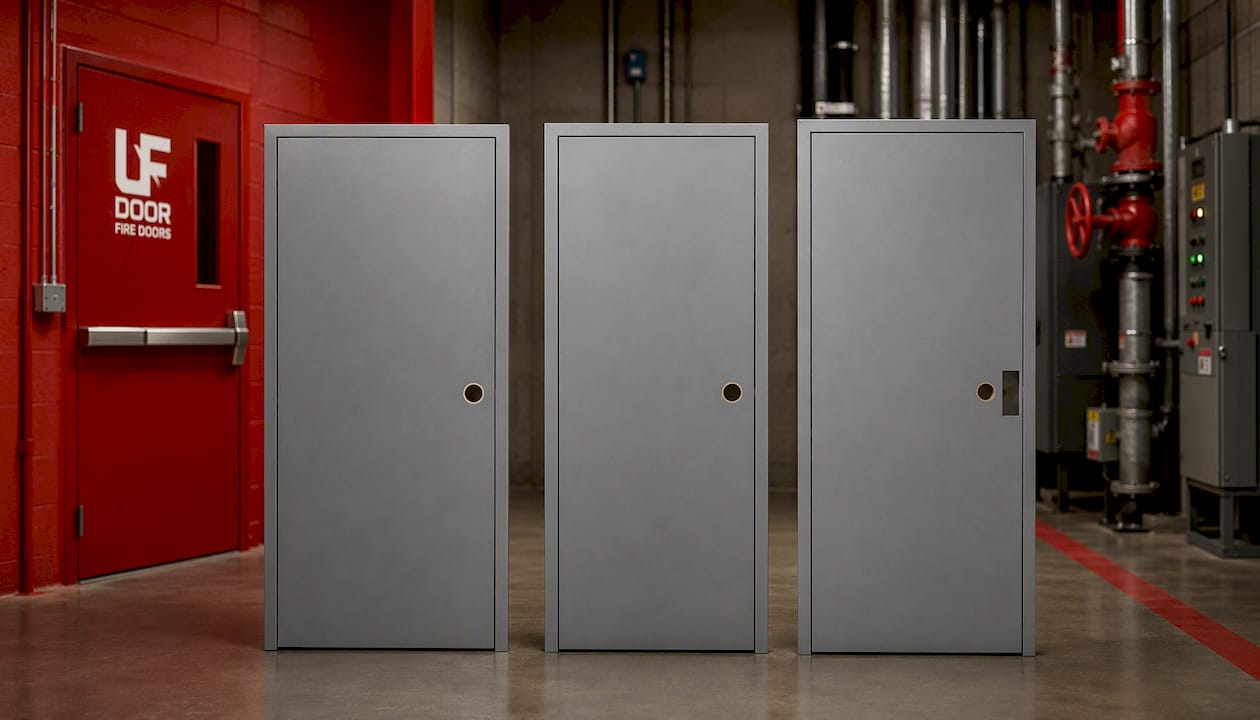
To get an expedited quote moving, send site photos, the wall’s fire-resistance rating, your exact opening dimensions, and your available access window. That’s usually enough for Ufdoors to confirm stock and schedule installation without a second round of questions. Stock options include the 30 x 80 steel door slab with single cylindrical prep for standard cylindrical-lock openings and matching welded steel door frames for full assembly replacements. If your opening doesn’t match a listed SKU, start at Ufdoors and a team member will help you specify the right assembly before it ships.
Sources
FAQ
When Must You Replace a Fire Door Instead of Repairing It?
Replace it when the door has been altered outside its listing, such as added hardware cutouts or structural damage, since field relabeling only works on an otherwise unmodified, compliant assembly.
How Fast Can a Compliant Emergency Replacement Be Completed?
Same-day or next-day replacement is realistic when the ordering party confirms wall rating, opening size, and site access upfront, since most delays come from missing information rather than stock availability.
What Records Does NFPA 80 Require for Fire Doors?
NFPA 80 requires an acceptance test at original installation, annual inspection and testing, inspection after any repair or maintenance, and retained records, with acceptance test documentation kept for the life of the assembly.
Can a Painted-Over or Missing Label Be Salvaged?
Yes, if the assembly hasn’t been modified beyond its original listing, an authorized agency can field-relabel it; if hardware or the door itself has been altered, replacement is the only compliant option.
What Information Speeds Up an Emergency Door Order?
Provide the wall’s fire-resistance rating, exact slab dimensions, frame type, and hinge or lock prep style, since these four fields determine whether the delivered assembly installs without rework.