
Contractors: Pass NFPA 80's 13 Items for ADA Door Compliance

In this guide, ADA door compliance refers to fire-rated door assembly compliance under NFPA 80, IBC, and UL listing rules, not accessibility clearance standards. Meeting it means three things right now: verify the door’s label matches its required rating, confirm every hinge, closer, and lockset is listed for fire-door use with self-closing and positive latching intact, and schedule acceptance testing plus annual inspections with records kept on file for the authority having jurisdiction.
TL;DR:
- Fire-rated door hardware, including hinges, closers, and locksets, must be listed for fire-door use and correctly matched to the existing door and opening requirements.
- The label on the door must be legible, unmodified, and match the required fire-rating to avoid inspection failures from incorrect or missing markings.
- Annual NFPA 80 inspections must verify proper hardware function, door clearances, and the absence of unapproved modifications, with records kept for at least three years.
- Matching the door’s rating to the wall assembly type and ensuring the label’s authenticity are critical for initial compliance and long-term certification.
- Renovation projects should verify existing rated openings before modifications or new hardware installation to prevent violations and inspection delays.
Table of Contents
- Quick Compliance Checklist for ADA Door Compliance On Site
- Which Codes Actually Govern Fire Door Compliance?
- What Does the Annual NFPA 80 Inspection Actually Check?
- Hardware Details That Fail Inspection Most Often
- When Should You Repair a Fire Door Instead of Replacing It?
- Overview of ADA Door Compliance Standards and Relevant Regulations
- What Are the Core Requirements for a Compliant Fire Door Assembly?
- Which Door Types Need the Most Attention During Inspection?
- What Labeling Details Do Inspectors Check Closest?
- What Happens When Fire Door Requirements Meet Renovation Work?
- What Contractors on the Ground Actually Get Wrong
- Order Listed Fire Doors and Schedule an Inspection
- Sources
- FAQ
Quick Compliance Checklist for ADA Door Compliance On Site
Before an inspector shows up, run through this list yourself. It catches the failures that account for most fire-door citations, and it takes less time than reading the full code section.
- Check the label. Confirm it is legible, permanently affixed, and matches the rating required for that opening.
- Confirm hardware listing. Hinges, closers, and locksets need to be rated for fire-door use, not just commercial-grade.
- Test self-closing and latching. The door must close fully and latch every time, with no unapproved hold-opens, wedges, or blocks propping it open.
- Document everything. Save acceptance test results from installation day and put annual NFPA 80 inspections on the calendar.
If you’re specifying replacement units for multiple openings, matching hardware and sizing to the existing frame saves a callback. A door opening measurement guide helps you avoid ordering the wrong slab size before the crew even shows up.
Which Codes Actually Govern Fire Door Compliance?
Two different documents do two different jobs, and mixing them up is where most confusion starts. NFPA 80 governs inspection, testing, and maintenance after a door is installed. The IBC, specifically Chapter 7 and Section 716, decides where a fire-rated assembly is required in the first place, based on occupancy type and the rating of the wall it sits in.
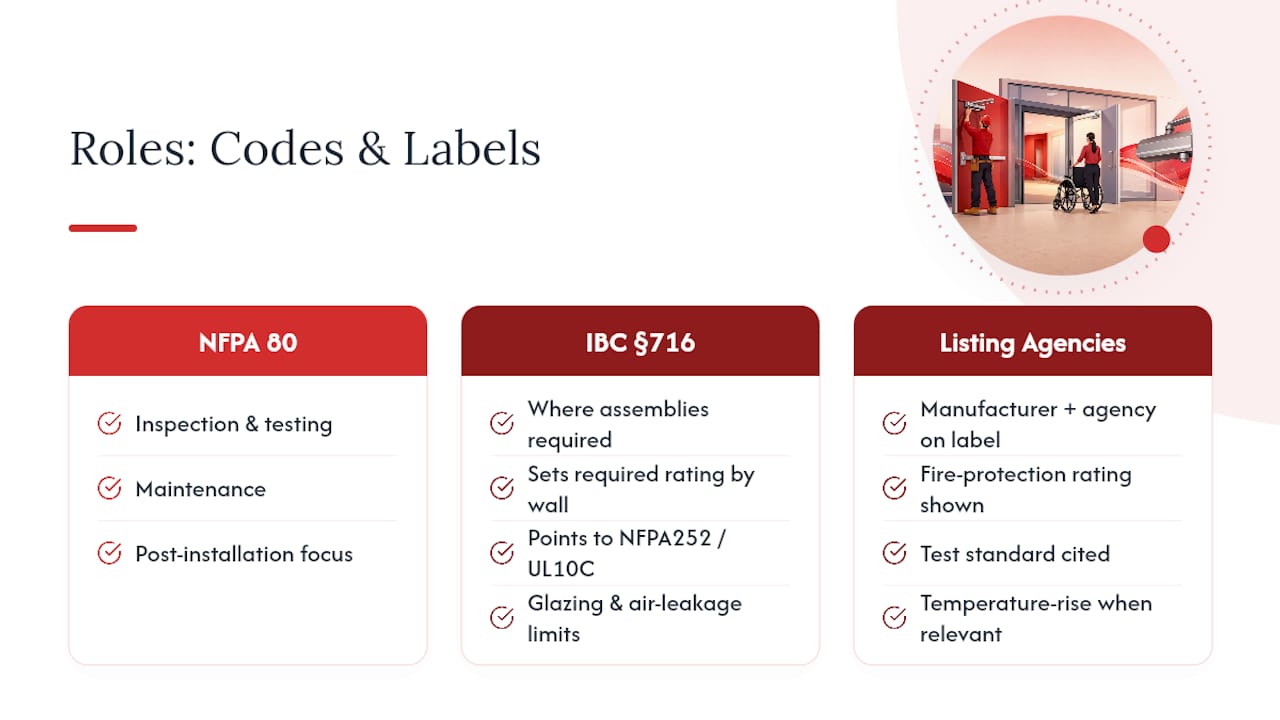
A factory label tells you whether the door itself qualifies. Every legitimate label must show the manufacturer’s name, the listing agency (UL, Intertek, FM, or ULC), the fire-protection rating, and the test standard used to certify it. Temperature-rise information appears when relevant, and an “S” marking indicates the assembly was tested to UL 1784 for smoke and draft control, which matters for corridor doors and smoke partitions specifically.
Ratings typically run 3 hours, 1.5 hours, 1 hour, 45 minutes, or 20 minutes, and each correlates to the wall assembly it protects. A door in a 2-hour fire barrier generally needs a 1.5 hour rating, while a door in a smoke partition may only need the “S” label without a high time rating at all. Stairwells, exit corridors, and openings near property lines tend to carry the highest ratings because they protect egress paths and separate buildings.
The IBC also points to NFPA 252 or UL 10C as the test methods for swinging fire doors, and it sets glazing and air-leakage limits that the label must reflect. If you’re specifying a replacement, matching the new unit’s rating to the old opening’s requirement, not just to the old door’s rating, avoids installing something that fails inspection on day one. A fire-rated door selection guide walks through picking the correct rating for a given wall type.
What Does the Annual NFPA 80 Inspection Actually Check?
Every fire door assembly needs an acceptance inspection right after installation, then at least one inspection every year after that. NFPA 80’s 2025 edition has required this cadence since the 2013 edition, and the requirement hasn’t loosened since. Building owners carry ultimate responsibility for scheduling it, even when they hire a third party to run the inspection.
The code lists 13 specific items an inspector checks on every rated opening. They break down into these categories:
- Labels are legible and correctly matched to the opening’s requirement.
- Door, frame, and hardware show no visible damage or missing parts.
- Clearances between the door and frame fall within tolerance on all sides.
- Self-closing and self-latching devices operate correctly without manual assistance.
- No unapproved auxiliary hardware, wedges, or hold-opens are present.
- Glazing, vision panels, and louvers meet size and installation limits.
- Gasketing and smoke seals are intact where required for “S” rated assemblies.
Written records need to identify the specific opening, the inspector, the date, any deficiencies found, and the corrective action taken. NFPA 80 has required inspection and testing records to be kept for at least three years since the 2013 edition, while acceptance-test documentation from initial installation should be kept for the life of the assembly. A fire door inspection service can run this annually and hand you records formatted for AHJ review, which saves a scramble when a fire marshal asks for paperwork on short notice.
Hardware Details That Fail Inspection Most Often
Hinges carry more weight than most specifiers give them credit for, literally. Fire-rated doors need ball-bearing hinges sized to the door’s weight and height, and SDI guidance spells out minimum quantities and weight ratings by door size. Undersized hinges sag over time, which throws off clearances and can prevent proper latching.
Closers need adjustment to achieve positive latching on every cycle, not just a satisfying click. Panic hardware on rated doors must carry a listing to UL 305 in combination with UL 10C, and paired doors need a coordinator so the active leaf closes and latches before the inactive leaf swings shut behind it. Skipping the coordinator is a common installation shortcut that fails inspection immediately.
Perimeter gaps and bottom clearances matter more than most crews realize. Industry guidance points to roughly 4 millimeters as a workable tolerance around the frame, and intumescent strips or smoke seals need to be intact and undamaged, especially on “S” rated openings where UL 1784 leakage limits apply. Glazing is the other frequent failure point: vision panels have strict size limits, and the glass itself has to be part of the originally tested assembly, not a field substitution. A resource on commercial door hardware breaks down hinge, closer, and lockset specifications by door type if you’re speccing hardware from scratch.
When Should You Repair a Fire Door Instead of Replacing It?
Minor issues usually don’t require a new door. A loose hinge, a closer that needs adjustment, or a latch that’s slightly out of alignment can typically be corrected in the field without touching the listing. Swap the hardware for a listed replacement, adjust, and retest.
Bigger problems change the calculation fast. A missing or illegible label, a cracked or delaminated core, warping that throws off clearances beyond tolerance, or glazing damage on a rated vision panel usually means replacement, not repair. If a label is missing but the door is otherwise sound, only an authorized NRTL field-labeling agent can issue a certificate that satisfies the AHJ. You cannot self-certify a missing label.
If a door won’t latch reliably or shows structural damage, treat it as an urgent replacement rather than a maintenance ticket. An emergency replacement service exists specifically for that situation, where waiting for a scheduled repair slot isn’t an option.
Overview of ADA Door Compliance Standards and Relevant Regulations
Within the scope of this guide, the regulatory framework that matters is the one built around NFPA 80, the IBC, and third-party listing agencies, not accessibility design standards. NFPA 80 is the maintenance and inspection standard: it dictates how often a fire door gets checked and what records prove it happened. The IBC is the placement standard: it decides which openings in a building need a rated assembly at all.
UL, Intertek, FM Approvals, and ULC serve as the testing and listing agencies that certify a door assembly meets its claimed rating before it ever ships. Their labels are the paper trail an inspector checks first, and a door without a legible, matching label is treated as non-compliant regardless of how well it was built. These standards work together: the IBC tells you where a rated door is required, the listing agency’s label proves the door meets that rating, and NFPA 80 makes sure it keeps meeting it year after year.
For contractors and property managers, this framework translates into a straightforward sequence. Confirm what rating an opening needs per the IBC and your local building code. Order a door and frame carrying a matching third-party label. Install it according to the listing’s requirements, since field modifications beyond approved prep can void that listing entirely. Then keep it inspected annually so the compliance you paid for at installation doesn’t quietly lapse.
What Are the Core Requirements for a Compliant Fire Door Assembly?
A compliant assembly rests on four connected requirements, and missing any one of them breaks the chain. The rating itself has to match the opening: a 90-minute door installed where a 3-hour rating is required doesn’t satisfy the code, even if it’s a quality door. The label has to be present, legible, and unmodified, since a painted-over or removed label makes an otherwise compliant door unverifiable on inspection day.
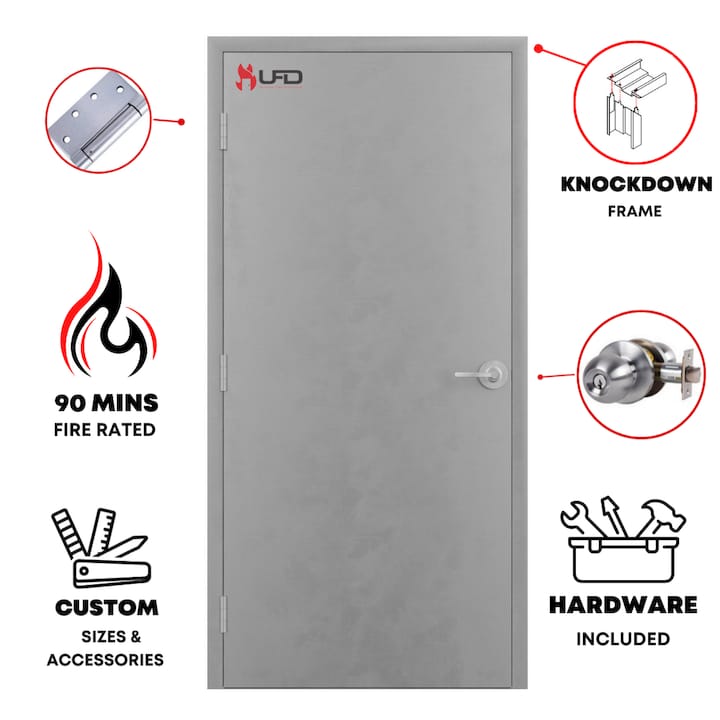
Hardware has to carry its own listing independent of the door’s rating. A fire-rated slab paired with a non-rated closer or an unlisted panic bar fails the assembly as a whole, because NFPA 80 evaluates the door, frame, and hardware together, not the slab alone. Clearances around the perimeter and at the bottom need to stay within the tolerances the listing specifies, since gaps that run too wide let heat and smoke pass before the rated time elapses.
Self-closing and self-latching performance ties all of it together. A door can have the right label, the right hardware, and correct clearances, and still fail inspection if it doesn’t close and latch on its own every single cycle. That’s usually a closer adjustment issue rather than a hardware defect, but it’s the single most common deficiency NFPA 80 inspectors cite. Getting all four requirements right at installation, and rechecking them annually, is what keeps an opening compliant rather than merely installed.
Which Door Types Need the Most Attention During Inspection?
Standard swinging doors make up most rated openings in commercial buildings, and they’re tested to NFPA 252 or UL 10C as referenced by the IBC. These are the doors covered throughout most of this guide: single and paired swinging units with hinges, closers, and latching hardware that all carry independent listings.
Fire-rated pairs need a coordinator device so the leaves close in the correct sequence, active leaf first, and this is one of the most frequently skipped components on job sites. Doors with vision panels or louvers face additional scrutiny because glazing size limits and louver dampers are part of the original tested assembly. Substituting glass or adding a louver after the fact, without going back to the listing agency, is a common way an otherwise good door loses its rating.
Rolling steel fire doors and fire shutters, common in loading docks and mechanical openings, follow a different testing standard than swinging doors but still fall under NFPA 80’s inspection and maintenance requirements. These need functional testing of the release mechanism and fusible link or smoke-detector activation, in addition to the general 13-point inspection criteria that apply to swinging assemblies.
Whatever the door type, the same rule governs all of them: any component not part of the original tested assembly, whether that’s glazing, a louver, or a hardware substitution, needs to be verified against the listing before it goes in. Specifiers ordering replacement units should confirm the new unit matches the original door type and configuration, not just the overall rating.
What Labeling Details Do Inspectors Check Closest?
The label itself gets more scrutiny than almost any other single element on a rated door, because it’s the fastest way for an inspector to confirm compliance without disassembling anything. A legible, unpainted, unmodified label showing the manufacturer, the listing agency, the fire-protection rating, and the applicable test standard is the baseline expectation on every opening.
Temperature-rise ratings appear on the label when the application requires them, typically expressed as 250, 450, or 650 degrees Fahrenheit, and these matter most in stairwell applications where limiting heat transfer through the door protects the egress path. The “S” marking for smoke and draft control indicates the assembly was tested to UL 1784 and meets specific air-leakage limits, a detail that matters enormously for corridor doors and smoke partition openings even when the fire-protection rating itself is modest.
Inspectors also check that the label hasn’t been altered or obscured by paint, stickers, or field modifications like added holes or cut-outs. A label that’s technically present but illegible is treated the same as a missing label. If that happens, the fix isn’t repainting around it. It requires an authorized field-labeling agent to issue new documentation, since self-certification isn’t an option under NFPA 80.
Property managers running multi-building portfolios benefit from standardizing on a consistent labeling and documentation format across openings, so an inspector reviewing five buildings sees the same record structure every time rather than five different systems.
What Happens When Fire Door Requirements Meet Renovation Work?
Renovation and tenant fit-out projects are where compliance gaps show up most often, because contractors working around existing openings sometimes treat the door as untouchable infrastructure rather than as an assembly with its own rules. Cutting a new opening for card-access hardware, adding a peephole, or trimming a door to fit a new floor height can void a listing if it goes beyond what the original approval allows.
New construction has the advantage of specifying correctly from the start: the IBC and local code tell the design team exactly which openings need a rating before a door ever gets ordered. Renovation work inherits whatever was installed years or decades earlier, and that older door may carry a rating that no longer matches current occupancy or corridor configuration after the space gets reconfigured.
The safest approach on any renovation is treating every existing rated opening as a checkpoint rather than an assumption. Before demolition starts, confirm what rating the current code requires for that opening’s new use, verify the existing door’s label still matches that requirement, and flag any opening where the label is missing, damaged, or clearly doesn’t match current specifications. Ordering replacement units early in the schedule, rather than after a fire marshal flags a deficiency during final inspection, keeps a renovation project from stalling in its last weeks.
Contractors coordinating multiple trades across a renovation timeline often lean on scheduling and procurement software, like Bidware for general contractors, to keep door orders and inspection windows aligned with the rest of the build rather than treated as an afterthought.
What Contractors on the Ground Actually Get Wrong
Most fire door failures I’ve seen traced back to on jobsites aren’t dramatic. Nobody installs an obviously wrong door on purpose. The failures are quiet: a closer nudged out of adjustment during a punch-list walk, a wedge left under a door during a hot afternoon that nobody removes before the inspector arrives, a label painted over by a crew that didn’t know what it was looking at.
The gap between “installed” and “compliant” is where most of the actual risk sits, and it’s wider than most property managers assume until an AHJ points it out. A door that passed acceptance testing on installation day can drift out of compliance within a year through nothing more than normal wear on hinges and closers, which is exactly why the annual inspection requirement exists rather than a one-time sign-off.
A company experienced in this area works with many clients to match listed door assemblies, hardware, and installation to the fire-code requirements a given opening actually needs, often backed by same-day or next-day delivery for urgent door replacements…
— Esteban
Order Listed Fire Doors and Schedule an Inspection
Some suppliers offer listed fire-rated steel doors, frames, and hardware as complete assemblies, backed by professional installation, inspection, and emergency replacement services for urgent needs. That last part matters most when a door fails inspection on a Tuesday and the AHJ wants it fixed by Friday.
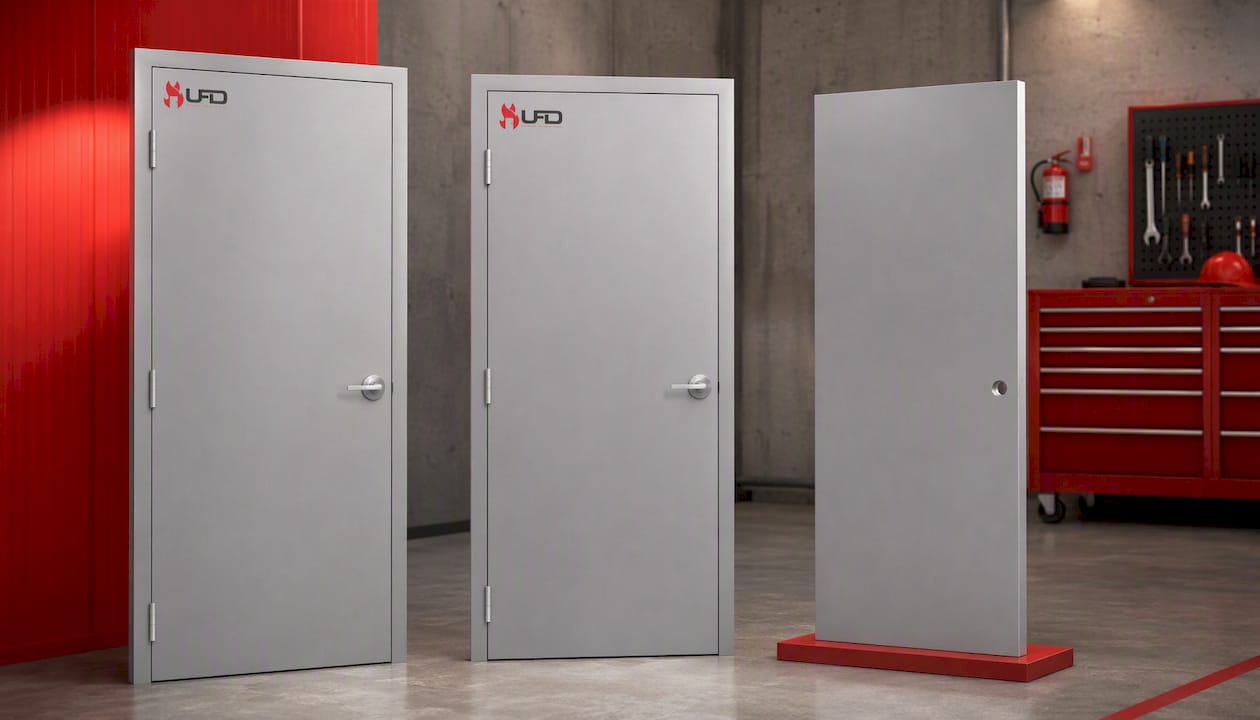
If you need a fast, code-ready replacement, the 28 x 84 steel door unit and the 32 x 84 steel door unit both ship as complete kits with self-closing hinges and a cylindrical lockset already prepped, so there’s no field guesswork on hardware compatibility. For retrofits where the frame stays in place, the 32 x 84 fire-rated door slab offers a 90-minute rated, 20-gauge option with a single cylindrical prep already cut. Browse the full fire-rated door and hardware catalog for frames, slabs, and commercial hardware sized to your opening. Contact Universal Fireproof Doors to schedule an acceptance inspection on new installations or request expedited replacement on a door that’s already failed inspection.
Sources
FAQ
What Does “ADA Door Compliance” Mean for Fire-Rated Doors?
In this context, compliance means a door assembly meets NFPA 80’s inspection and maintenance rules, carries a valid third-party listing label, and satisfies the rating the IBC requires for that opening. It has nothing to do with accessibility clearance rules; it refers strictly to fire-code and listing compliance.
How Often Does a Fire Door Need Inspection?
Every rated fire door assembly needs an acceptance inspection right after installation, then at least one full inspection every year after that under NFPA 80. Inspection records need to be kept for at least three years, while acceptance-test documentation should be retained for the life of the door.
What Are the 13 Inspection Criteria in NFPA 80?
The 13 criteria cover label legibility, hardware condition, clearance tolerances, self-closing and latching function, glazing limits, seal condition, and the absence of unapproved field modifications, among other items. NFPA 80 has kept this same list since its 2013 edition.
Can a Missing Fire Door Label Be Replaced in the Field?
Yes, but only an authorized NRTL field-labeling agent can issue a new label or certificate that satisfies the AHJ. A property owner or contractor cannot self-certify a missing or illegible label under any circumstance.
How Much Do Fire-Rated Steel Doors From Ufdoors Cost?
Pricing depends on door size, rating, and hardware configuration, so current prices are listed directly on the Ufdoors product catalog. Ufdoors also offers same-day or next-day delivery on many units for urgent replacement needs.