
Specifiers: Factory Glazed Fire Door Vision Panels to Pass NFPA 80

Vision panels are permitted in fire-rated doors, but only when the glazing and the surrounding kit are part of a tested and listed doorset assembly. Ordinary glass is never acceptable, no matter how thick it looks. Panels above a certain size often trigger a switch to insulated, radiant-heat-blocking glazing, and any deviation from the tested configuration can strip the door of its rating entirely.
TL;DR:
- Fire-rated vision panels must be part of a tested, listed doorset assembly with labeled, tested glazing; ordinary glass is never acceptable.
- Larger panels, especially in 60 and 90-minute doors, typically need insulated, radiant-heat-blocking glazing, not just integrity-only options.
- Sizing and placement of vision panels are strictly limited to tested configurations; off-center or close to edges can void the fire rating.
- The entire assembly, including beading and seals, must match the single tested configuration; field modifications or substitutions risk failure.
- Ongoing NFPA 80 inspections verify labels, glazing condition, and hardware annually, and factory-glazed doors simplify compliance.
Table of Contents
- Which Codes Govern Fire Door Vision Panels?
- What Glazing Materials Are Approved for Vision Panels?
- How Large Can a Fire Door Vision Panel Be?
- Why Does Assembly Compatibility Make or Break Certification?
- What Does NFPA 80 Require for Ongoing Inspection?
- What Should Go in a Fire Door Vision Panel Specification?
- What Materials Go Into a Fire-Rated Vision Panel?
- What Do Fire Door Vision Panels Cost?
- What Goes Wrong With Fire Door Vision Panels?
- Manufacturer Perspective: Why Factory Certification Simplifies Approval
- Get Compliant, Factory-Glazed Fire Doors From Ufdoors
- Standards and Guidance Worth Keeping on File
- Sources
- FAQ
Which Codes Govern Fire Door Vision Panels?
Compliance for fire door vision panels runs through a handful of standards, and specifiers should know which document answers which question before a submittal ever lands on their desk. The UL fire-rated doors guide confirms that glazing must be labeled, tested, and listed specifically for use in a fire door assembly. Ordinary glass, tempered or otherwise, doesn’t qualify.
Here’s what to request on submittal:
- UL 10B or UL 10C test reports (or the national equivalent) confirming the glazing was tested as part of the doorset, not as a standalone material.
- A field-of-application statement, which spells out the exact size, position, and hardware range the test evidence actually covers.
- NFPA 80 inspection records, since annual checks under NFPA’s fire door guidance confirm labels, glazing condition, and installation were done to the manufacturer’s instructions.
- Code cross-reference, since the IBC and similar national codes often trigger the insulated-glazing requirement once a vision panel exceeds about 100 square inches, a threshold tied to radiant heat exposure rather than flame integrity alone.
Local amendments vary, so always confirm the jurisdiction’s current adoption cycle before finalizing a spec.
What Glazing Materials Are Approved for Vision Panels?
Fire-rated glazing splits into two functional families, and mixing them up is one of the fastest ways to fail an inspection. Integrity-only glazing (often wired or ceramic) blocks flame and smoke but does little to stop heat transfer, which limits where it can go on doors rated above 20 minutes. Insulated, interlayered glazing adds a gel or laminate core that actively slows temperature rise, which is why it dominates FD60 and FD90 doors carrying larger panels.
Quick reference: glazing families
- Wired glass: integrity-only, common in older FD30 installations, rarely specified for new work now.
- Ceramic glazing: integrity-only, thin profile, popular where sightlines matter more than heat control.
- Insulated laminated glazing: blocks radiant heat, required once panel area crosses the threshold that pushes a door into insulated territory.
Larger vision areas in 60 and 90 minute doors commonly need insulated fire-resistive glazing to control radiant heat under IBC and UL guidance. On the submittal, ask for the exact glazing product number, its test report, and, for schools or care facilities, its impact classification under the applicable safety glazing standard.
How Large Can a Fire Door Vision Panel Be?
Manufacturers publish tested panel geometries rather than open-ended sizing, and that’s not a marketing limitation. It’s a testing limitation. A 300mm by 600mm rectangle or a 150mm by 900mm slim light gets its rating from having been burned in a furnace at that exact size, in that exact position. Change the dimensions and you’ve created an untested configuration.
Key rules specifiers rely on:
- Edge clearance matters. Panels placed too close to the door’s edge, hinge stile, or lock stile can invalidate the test evidence even if the glass itself is correct.
- Off-center panels are a red flag. Manufacturer guidance on vision panel sizing stresses that position shown in the field-of-application statement is as binding as the size itself.
- ADA viewing height applies on top of fire code, not instead of it. Schools, hospitals, and care homes frequently combine standard sightline heights with smaller or frosted panels to balance visibility against patient or resident privacy.
- Bespoke sizes need factory certification. If a project genuinely requires an off-standard opening, that panel needs its own test evidence, not an assumption that a larger version of a certified size will behave the same way.
Why Does Assembly Compatibility Make or Break Certification?
A fire door’s rating doesn’t belong to the glass, the frame, or the beading individually. It belongs to the tested combination of all of them. Compliance experts note that the most common oversight in the field is treating a fire door as separate parts instead of one evidenced doorset. Swap the intumescent tape for a similar-looking product, or change the bead profile, and the door can fail even though every individual component carries a listing somewhere.
Follow this sequence to keep an assembly defensible:
- Confirm the glazing, beading, and intumescent seal all appear together on the same test report. A listed glass in an unlisted bead profile is not a compliant assembly.
- Avoid field-cutting whenever possible. Regulatory guidance on fire door retrofits warns that cutting openings on site typically voids certification unless the work follows a manufacturer-approved field kit.
- Use factory glazing or a documented field kit, and follow the installation instructions to the letter, since even a correctly listed glazing kit installed off-spec loses its protection.
- Photograph and file the installation so there’s evidence the work matched the manufacturer’s instructions, not just a verbal assurance from the crew.
Pro Tip: Keep the manufacturer’s installation sheet stapled to the purchase order for every glazed door on a project. When an inspector asks how a panel was installed, “here’s the sheet we followed” closes the conversation fast.
What Does NFPA 80 Require for Ongoing Inspection?
Annual inspection isn’t optional paperwork. Under NFPA 80, fire doors and their vision panels are checked every year to confirm the assembly still matches what was originally certified.
Inspectors typically look for:
- Legible labels on the door, frame, and glazing kit, since a painted-over or missing label is an automatic finding.
- Intact, correctly sealed glazing with no cracked beading, missing intumescent tape, or gaps around the panel edge.
- Functional closing hardware, because a vision panel means nothing if the door won’t self-close and latch.
The responsible party should keep test certificates, field-of-application statements, and installation instructions on file, ready to hand to an inspector or authority having jurisdiction on request. When a panel is damaged, contact the manufacturer for a certified replacement kit rather than sourcing generic glass locally. It’s the difference between a five-minute repair and a door that fails its next inspection.
What Should Go in a Fire Door Vision Panel Specification?
A tight specification saves weeks of back-and-forth with suppliers. Cover these points before the order goes out:
- Required fire rating (20, 60, or 90 minutes) and the specific glazed configuration size and position.
- Glazing product number and its listing reference.
- A copy of the test certificate covering that exact glazing, size, and position.
- The field-of-application statement, confirming the door’s actual application falls within tested limits.
- Manufacturer’s installation instructions for the glazing kit.
- Confirmation of factory glazing versus an approved field-installed kit.
| Decision Point | Factory-Glazed Door | Approved Field Kit |
|---|---|---|
| Compliance risk | Lower, since glazing was installed under test conditions | Higher, depends on installer following instructions exactly |
| Lead time | Built into manufacturing schedule | Faster for existing doors already on site |
| Best use case | New construction, planned replacements | Retrofits where a bare opening needs a certified vision panel |
Ask any supplier for the test report and field-of-application statement before placing an order, and confirm in writing whether the panel ships factory-glazed.
What Materials Go Into a Fire-Rated Vision Panel?
The frame around a vision panel does as much work as the glass itself. Most fire-rated doorsets use a steel or hollow metal beading system that holds the glazing under compression, paired with an intumescent seal that expands under heat to close any gap between glass and frame. That expansion is what keeps flame and smoke from tracking around the edge of the panel once the surrounding glazing tape begins to char.
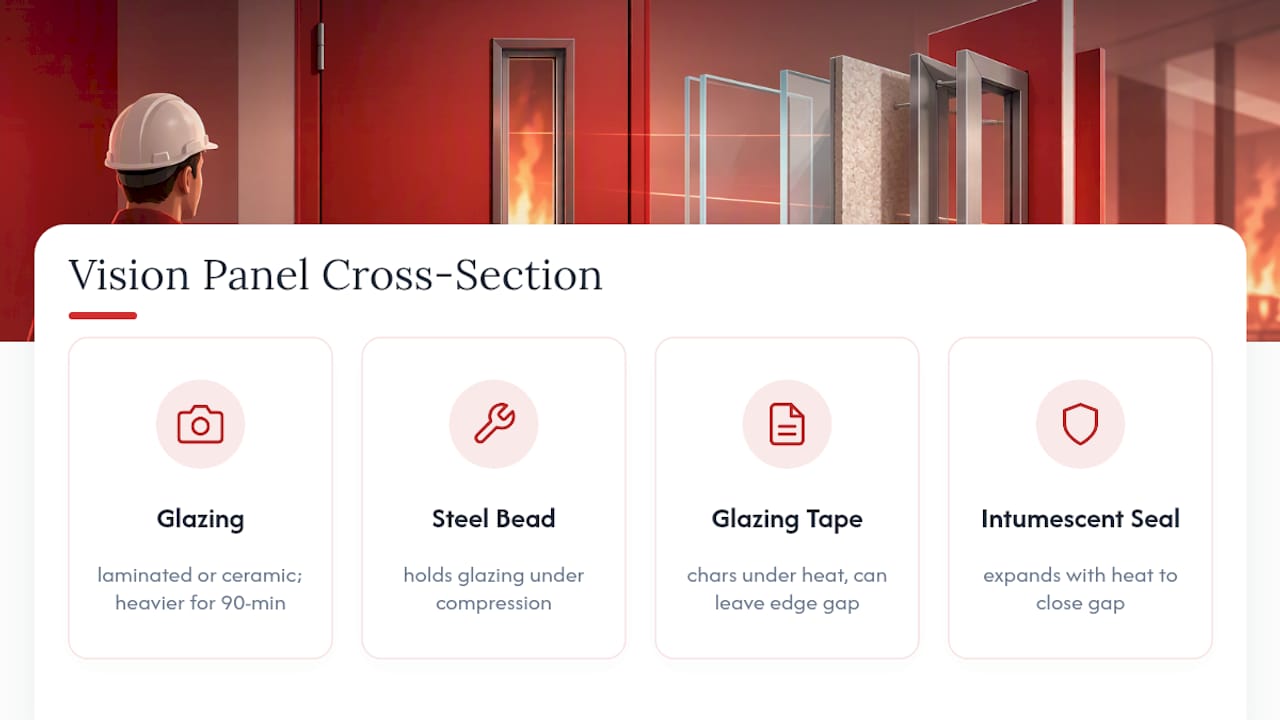
Construction methods vary by rating. A 20-minute door might use a simple ceramic or wired glazing unit set in a steel bead with minimal intumescent material. A 90-minute insulated panel typically uses a laminated, gel-interlayered unit that’s noticeably heavier and thicker, set into a deeper bead profile designed to accommodate the glass’s expansion under heat. Hollow metal frames dominate commercial applications because steel holds its shape at high temperatures far longer than wood, and the frame’s dimensional stability is part of what the door was tested with.
Manufacturers increasingly offer pre-glazed slabs where the vision panel arrives already installed and sealed under factory conditions, rather than shipped as a bare slab with a cutout. That approach removes the single riskiest step in the process: field glazing done without the exact bead, tape, and torque specifications the test report demands.
What Do Fire Door Vision Panels Cost?
Pricing depends heavily on rating, panel size, and whether the door arrives factory-glazed or needs field installation. Integrity-only glazing in a smaller panel adds relatively little to a standard door slab’s price. Insulated, laminated glazing for a 90-minute door with a larger panel costs meaningfully more, since the glass itself is thicker, heavier, and manufactured to tighter tolerances.
Factory-glazed doors usually run higher upfront than a bare slab with a planned field kit, but that premium buys certainty. A door that arrives with its vision panel already installed under test conditions removes the labor cost and liability of a field glazing crew getting the bead profile or intumescent tape slightly wrong. Field kits can look cheaper on a bid sheet until a failed inspection forces a re-glaze, which usually costs more than doing it right the first time.
Bespoke or off-standard panel sizes carry the steepest premium, since they may require new test evidence rather than an existing listing. Where budget allows, sticking to a manufacturer’s published standard sizes keeps both cost and compliance risk lower. Property managers replacing multiple doors across a building often find bulk ordering standard configurations brings the per-unit cost down while keeping every door on the same tested platform, which also simplifies future inspections.
What Goes Wrong With Fire Door Vision Panels?
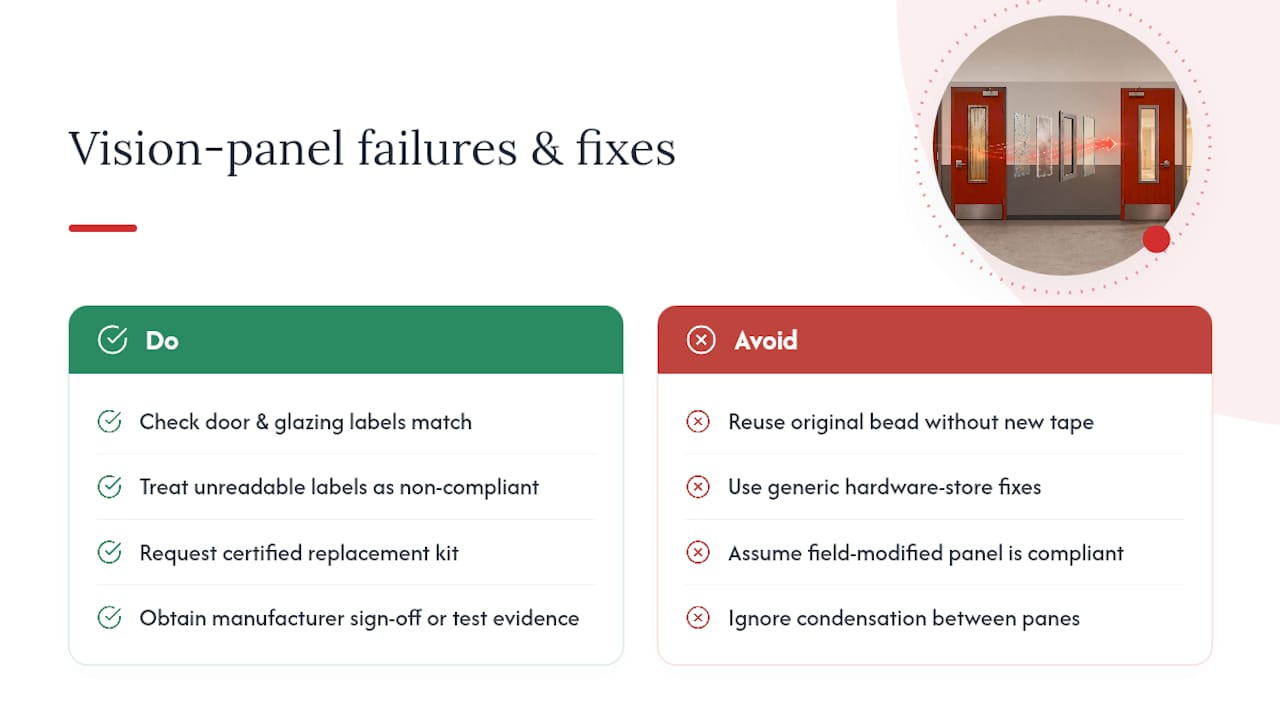
The most frequent failure isn’t a bad piece of glass. It’s a mismatched component hiding in plain sight. A panel glazed with the correct listed glass but the wrong bead profile or a substitute intumescent tape can look perfectly fine on a walkthrough and still fail a strict compliance review, because the tested assembly never included that substitution.
Cracked or missing intumescent seals around the panel edge show up often in older installations, usually from a repair where someone reused the original bead without replacing the tape underneath. Rattling or loose glazing is another common complaint, typically caused by beading that wasn’t torqued to the manufacturer’s specification during installation. Condensation or fogging between layers of an insulated unit signals a seal failure in the glazing itself, not something a facilities team can fix on site.
Troubleshooting starts with the label, not the glass. Confirm the door’s rating label and the glazing’s own marking are both legible and match the field-of-application statement on file. If either is missing or unreadable, treat the door as non-compliant until the manufacturer confirms otherwise. For loose or damaged beading, request a certified replacement kit rather than a generic hardware-store fix. And if a panel was ever field-modified without documentation, assume the rating is compromised until proven otherwise with fresh test evidence or manufacturer sign-off.
Manufacturer Perspective: Why Factory Certification Simplifies Approval
Specifiers who chase the lowest bid on glazing often pay for it later in failed inspections. Factory-glazed doors and manufacturer-approved kits remove the guesswork that field crews introduce, and they come with paperwork already matched to the exact assembly installed. When evaluating a supplier, ask for test certificates before asking about lead time. A door that arrives fast but undocumented isn’t actually faster once an inspector sends it back.
— Esteban
Get Compliant, Factory-Glazed Fire Doors From Ufdoors
The supplier offers factory-tested fire-rated steel doors with vision panels installed and sealed under controlled conditions, not assembled on a job site under time pressure. That’s the core advantage over sourcing a bare slab and a separate glazing crew: the paperwork and the physical door match from day one, which is exactly what an inspector wants to see.
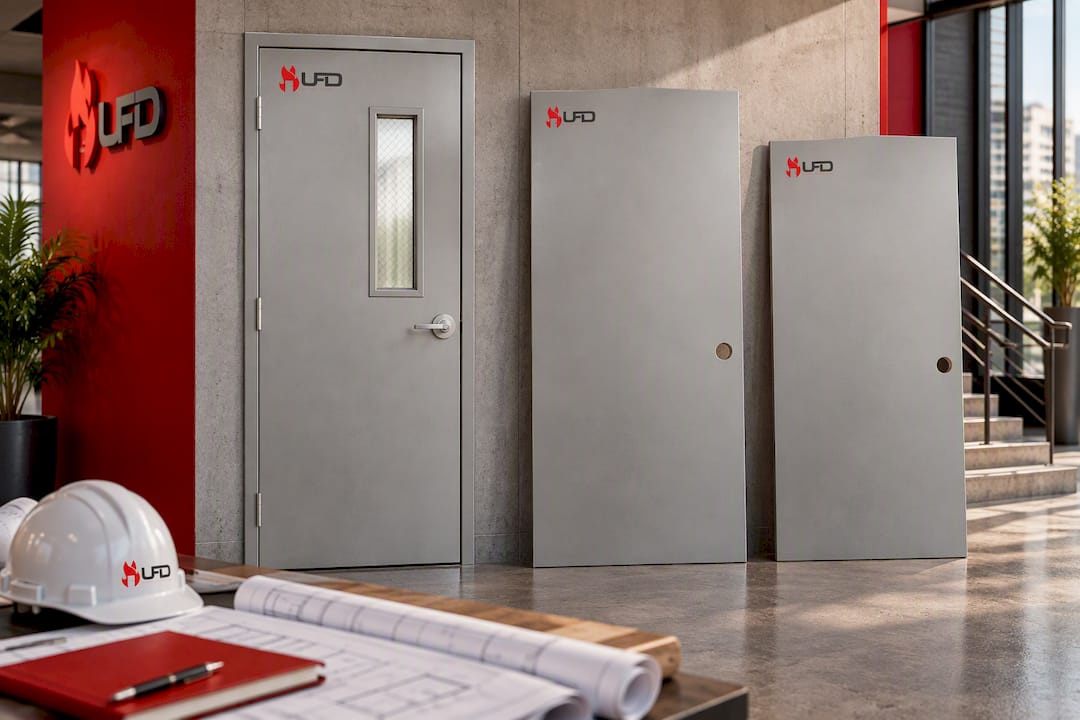
Representative options worth requesting in a specification include the 30 x 84 steel door unit, a complete flush hollow metal doorset with frame, self-closing hinges, and a cylindrical lockset already fitted. For higher-rated openings, the 32 x 84 steel door slab and the 32 x 72 steel door slab both carry a 90-minute rating in 20-gauge steel, sized for common commercial openings.
Ask for the test reports and field-of-application statements before you order, and check the full catalog for current sizing and same-day or next-day delivery options where a project timeline is tight.
Standards and Guidance Worth Keeping on File
Keep these on hand when preparing or reviewing a submittal: the UL fire-rated doors guide, NFPA’s fire door inspection FAQ, and GOV.UK’s fire door retrofit guidance. For inspection services, see Ufdoors’s fire door inspection page.
Sources
- UL: Fire-rated doors guide
- NFPA: Fire doors FAQs (2025)
- International Fire & Safety Journal: Fire door compliance FAQ
- Gov
- Fire Door Range: Vision panels — rules, sizes & glazing options
FAQ
Can You Have a Vision Panel in a Fire-Rated Door?
Yes, as long as the glazing and the surrounding beading and seals are part of a tested and listed fire door assembly. Ordinary glass, including standard tempered glass, is never acceptable in a rated opening.
Do Fire Doors Need a Vision Panel?
No, vision panels aren’t mandatory on every fire door. Codes often require them at specific locations, such as stairwell doors or doors near blind corners, but where a code doesn’t require one, a solid rated door remains fully compliant on its own.
What Are the Regulations for Vision Panels on Fire Doors?
Vision panels must use glazing tested and listed as part of the specific doorset, matching the size, position, and beading shown in the manufacturer’s field-of-application statement. Annual inspection under NFPA 80 confirms the panel, labels, and hardware remain in their originally certified condition.
What Is the Maximum Size for Vision Panels in Fire-Rated Doors?
There’s no single universal maximum. Manufacturers publish tested sizes for each rating, and panels exceeding roughly 100 square inches on 60 and 90 minute doors commonly require insulated glazing to control radiant heat rather than the smaller integrity-only options used on shorter-rated doors.