
Same Day 20 Minute Fire Door Replacements for Contractors & Owners

A 20-minute commercial fire door is a labeled hollow-metal door assembly built for corridor openings, most often paired with one-hour-rated walls. Confirm the wall rating, read the label wording, and check NFPA 80 compatibility before you specify or install one. If any of those three don’t line up, stop the job and request certified product data and shop drawings before the door goes in the frame.
TL;DR:
- Confirm that the wall assembly rating, sprinkler allowance, and AHJ approval align with the selected door’s rating before specification or installation.
- Ensure the door core is mineral fiberboard for ratings up to 20 minutes and verify the gauge, coating, and frame type match tested configurations.
- Use fire-listed hardware, including hinges, closers, and exit hardware, installed following the manufacturer’s schedule, with no field modifications that could void the label.
- Never remove, paint over, or damage the fire door label, and always verify the label matches the delivered door’s certification to avoid inspection failures.
- In urgent cases, order from suppliers capable of same-day or next-day delivery with complete submittal documentation and confirmed labeling to prevent delays and rework.
Table of Contents
- Where a 20-Minute Fire Door Rating Applies
- What to Specify in a 20-Minute Hollow-Metal Door Submittal
- Hardware and Installation Steps That Keep the Listing Valid
- Reading a Fire Door Label Without Guessing
- Ordering and Installing a Replacement Door Fast
- Why 20-Minute Fire Doors Fail Inspection
- How Long a 20-Minute Fire Door Lasts and What Upkeep It Needs
- What a 20-Minute Fire Door Actually Costs to Install
- Practitioner Tips: Mistakes to Avoid on Urgent Replacements
- Get a Code-Compliant 20-Minute Fire Door Fast
- Sources
- FAQ
Where a 20-Minute Fire Door Rating Applies
A 20-minute rated door is the standard exception to the 75% rule, the general code logic that says a door assembly should carry roughly 75% of the wall’s fire rating around it. Under that logic, a one-hour wall would call for a 45-minute door. Corridors get a specific carve-out instead: a 20-minute door is commonly accepted in a one-hour corridor wall, because corridor openings are treated differently than openings in fire-rated barrier walls that separate occupancies.
Sprinklers complicate this more than most specifiers expect. A fully sprinklered building can reduce corridor wall rating requirements in some jurisdictions, but that reduction doesn’t automatically permit a lower door rating on its own. Treat sprinkler credits and door rating credits as two separate questions, verified against the applicable code section, not one that assumes the other.
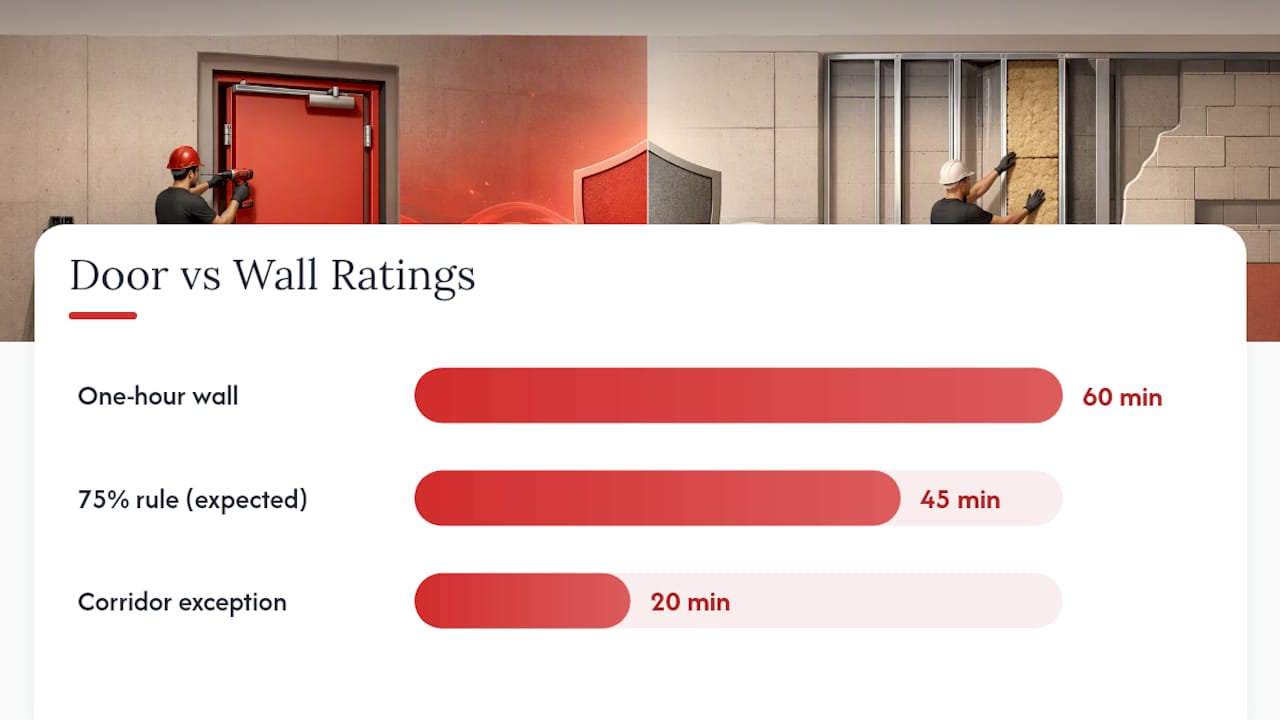
Building teams typically point to IBC Table 716.1 for the governing fire door and window rating table, cross-referenced against the wall assembly’s own listed rating. That table is a starting point, not a final answer.
Before you finalize a spec:
- Confirm the wall assembly’s tested rating with the architect of record, not an assumption based on wall thickness.
- Check whether the corridor is in a sprinklered building and what rating reduction, if any, the local code actually grants.
- Get written confirmation from the authority having jurisdiction (AHJ) when a rating combination looks unusual for the occupancy type.
- Document the wall-to-door rating relationship in the submittal package, not just in an email thread.
What to Specify in a 20-Minute Hollow-Metal Door Submittal
Face sheet gauge is the first thing a plan reviewer checks, and most commercial 20-minute doors use 18 gauge or 20 gauge cold-rolled or galvanized steel, built to a standard 1 3/4 inch thickness. The core matters just as much as the skin. Mineral fiberboard cores dominate commercial applications because they hold a listing across a wider range of hourly ratings, while wood core doors are acceptable only at the 20-minute level and nowhere higher. Specify the wrong core for the wrong rating and the whole assembly loses its listing, regardless of how solid the door looks.
Frame selection follows a similar logic. Welded frames offer the tightest fit and the cleanest look for new construction, while knock-down frames speed up field installation on renovation work where wall conditions are already tight. Both need to be built to recognized ASTM steel standards for gauge and coating. Any door or frame that exceeds the sizes covered under the original fire test needs additional certification from a testing agency the AHJ accepts, since oversized assemblies can shift allowable hardware and glazing limits.
Key submittal items to require from any supplier:
- Face sheet gauge and coating type (galvanized vs. cold-rolled).
- Core material, explicitly stating wood core versus mineral fiberboard.
- Frame type (welded or knock-down) and anchor details.
- Vision lite size limits, since glazing area is capped for rated openings and varies by test standard.
- Edge and seam construction details that affect the door’s listing.
Pro Tip: Ask your supplier for the fire label wording before the door ships, not after. A mismatched core or an oversized vision lite discovered on delivery day turns a routine order into an emergency replacement.
Hardware and Installation Steps That Keep the Listing Valid
A 20-minute fire door is only as compliant as the hardware bolted to it. Every fire-rated door must be self-closing and self-latching, full stop, and the hinges holding it need their own fire listing rather than a generic hardware-store equivalent. Standard panic hardware alone doesn’t satisfy a fire-rated opening. If the corridor door needs an exit device, specify fire-exit hardware listed for that rating, and skip mechanical dogging unless the device is specifically listed for fire door use.
Follow this sequence on install day:
- Verify the wall opening matches the frame’s tested size before setting anything in place.
- Confirm hinge count and closer model against the door manufacturer’s listed hardware schedule.
- Set clearances at the head, jambs, and undercut according to NFPA 80, never eyeballed.
- Install gasketing where the opening also requires smoke and draft control per UL 1784.
- Adjust the closer so the door latches fully from a fully open position, not just a light push.
- Photograph the label, hardware, and clearances before calling the inspection.
Never field-modify a labeled door or frame, including drilling extra holes for hardware not on the listed schedule. That single shortcut voids the assembly’s listing faster than almost anything else on a job site.
Pro Tip: Keep a printed copy of the hardware group number on-site during installation. Inspectors ask for it more often than they ask for anything else, and “it’s in the truck” doesn’t satisfy an AHJ.
Before signing off, run through final acceptance checks: label present and legible, hardware matches the listed schedule, closer tested through a full swing, latch and seals functioning, and any AHJ-specific documentation ready to hand over.
Reading a Fire Door Label Without Guessing
The label riveted to the door hinge edge carries more information than most people bother to read closely. It states the fire rating in minutes, the test standard the door was certified under (typically UL 10C today, with NFPA 252 referenced by code), and, on higher-rated doors, a temperature-rise classification.
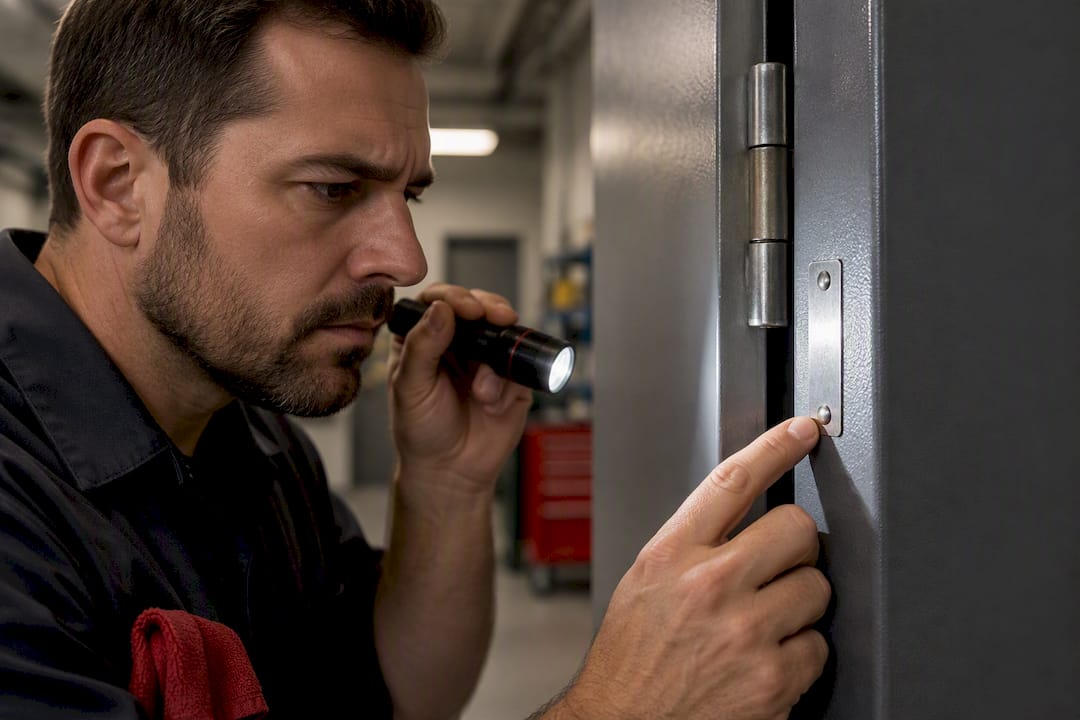
Some 20-minute assemblies carry a “Tested Without Hose Stream” designation. That phrase isn’t a footnote. A hose-stream test simulates the thermal shock of firefighting water hitting a hot door, and a door tested without it may carry different glazing allowances than a hose-stream-rated equivalent. Swapping one for the other on a replacement job, assuming they’re interchangeable because both say “20 minutes,” can trigger an acceptance issue at final inspection.
If a delivered door’s label doesn’t match the approved submittal:
- Hold the shipment before it goes into the opening.
- Request a certified submittal or manufacturer’s letter confirming the listing.
- Notify the AHJ before proceeding rather than after a failed inspection.
Ordering and Installing a Replacement Door Fast
An urgent replacement, whether from fire damage, code violation, or a failed inspection, still needs the full submittal package: product data sheets, shop drawings, a hardware schedule, and a construction sample when the project calls for one. Skipping steps to save a day usually costs more time later when the AHJ rejects the install.
Here’s the typical sequence on a compliant fast-track order:
- Confirm exact opening size and existing frame condition on-site before ordering.
- Submit product data and shop drawings for the specific door and hardware schedule.
- Order from a supplier that can commit to expedited delivery, since standard lead times often run longer than an occupancy deadline allows.
- Install per NFPA 80 and verify the installed door matches the approved shop drawings exactly, not an approximate substitute.
- Obtain AHJ sign-off and keep the inspection report on file.
Why 20-Minute Fire Doors Fail Inspection
Most code violations on 20-minute doors trace back to one of three habits, and none of them require bad materials to happen. The first is assuming a rating without checking it. A door gets swapped during a renovation because it “looks the same” as the old one, and nobody confirms whether the wall it sits in still calls for a 20-minute assembly or something higher.
The second is hardware substitution. A maintenance team replaces a worn closer or a broken hinge with whatever is in the supply closet, not what’s listed for that specific door. That single swap can invalidate the entire assembly’s rating, even though the door itself never changed.
The third, and probably the most common, is label removal or damage. Painting crews sand over labels during a repaint. Movers scratch them off moving furniture through a corridor. Once the label is gone or unreadable, an inspector has no way to confirm the door’s rating on sight, and the burden falls on the building owner to produce documentation proving what’s actually installed.
Avoiding all three comes down to a habit more than a technical fix: treat every fire door label as a permanent part of the building’s compliance record. Never paint over it, never let unlisted hardware near it, and never assume a rating transfers from an old wall assembly to a renovated one without checking. A five-minute label check during routine maintenance catches problems years before an inspector does.
How Long a 20-Minute Fire Door Lasts and What Upkeep It Needs
A well-installed hollow-metal fire door commonly lasts several decades of structural service, but the fire rating itself depends on annual verification, not just the steel holding up. NFPA 80 requires yearly inspection and testing of fire door assemblies, checking that the door closes fully from any open position, the latch engages without forcing, gaskets and seals remain intact, and no unauthorized holes or hardware have appeared since the last check.
Wear shows up first at the hardware, not the door slab. Closers lose their adjustment over years of heavy corridor traffic. Hinges loosen. Gasketing compresses and stops sealing the way it did when it was new. None of that shows up as visible damage to the door itself, which is exactly why an annual functional test matters more than a visual walk-by.
Environmental exposure matters too. A door in a high-traffic loading corridor wears differently than one in a quiet office hallway, and steel doors near exterior openings can develop corrosion at the base if moisture gets in. Budget for a documented annual inspection, prompt hardware replacement with listed components only, and a repaint schedule that never covers the label. Treat maintenance as part of the compliance requirement, not an optional add-on, because an inspector doesn’t distinguish between a door that failed and a door nobody checked.
What a 20-Minute Fire Door Actually Costs to Install
Budgeting for a 20-minute fire door assembly means pricing three separate line items: the door and frame, the listed hardware, and professional installation. Steel door slabs vary based on gauge, core material, and hardware prep, and a mortise lock prep or cylindrical prep adds to the base cost of a bare slab. Frame cost depends on whether the opening needs a welded frame for new construction or a knock-down frame for a renovation retrofit.
Hardware is where budgets often go sideways. Fire-listed hinges, a rated closer, and fire-exit hardware where required all cost more than their non-rated equivalents, and buying the wrong part to save money upfront means paying for it twice once an inspector rejects it. Installation labor adds another variable, particularly on emergency replacements where a crew has to work around an occupied building rather than an open construction site.
The real cost driver isn’t the door itself. It’s the price of getting the spec wrong the first time: a rejected inspection, a delayed occupancy permit, or a second order placed after the first one arrives with the wrong label. Contractors and property managers who nail down the wall rating, hardware schedule, and submittal package before ordering consistently spend less overall than those who order fast and fix problems after delivery.
Practitioner Tips: Mistakes to Avoid on Urgent Replacements
The costliest mistake I see is assuming a rating instead of confirming it. Someone sees “fire door” stamped somewhere and stops asking questions. The second is mixing unlisted hardware onto a labeled door because it fit. The third is a maintenance crew removing a label during a repaint and nobody flagging it for months.
When a job goes urgent, hold it, request a label photo and full submittal, and use a certified supplier and installer rather than whoever answers the phone first. One property manager I’ve heard of avoided an occupancy delay entirely because their supplier had a compatible listed assembly ready to ship the same day the old door failed inspection.
— Esteban
Get a Code-Compliant 20-Minute Fire Door Fast
A company handles the whole job, not just the door: supply, professional installation, and ongoing maintenance for commercial fire-rated steel doors, hollow metal frames, and listed hardware, backed by fast delivery options when a corridor door fails inspection and urgent replacement is needed. That combination matters most exactly when a project can’t wait for a standard lead time and still needs certified documentation for the AHJ.
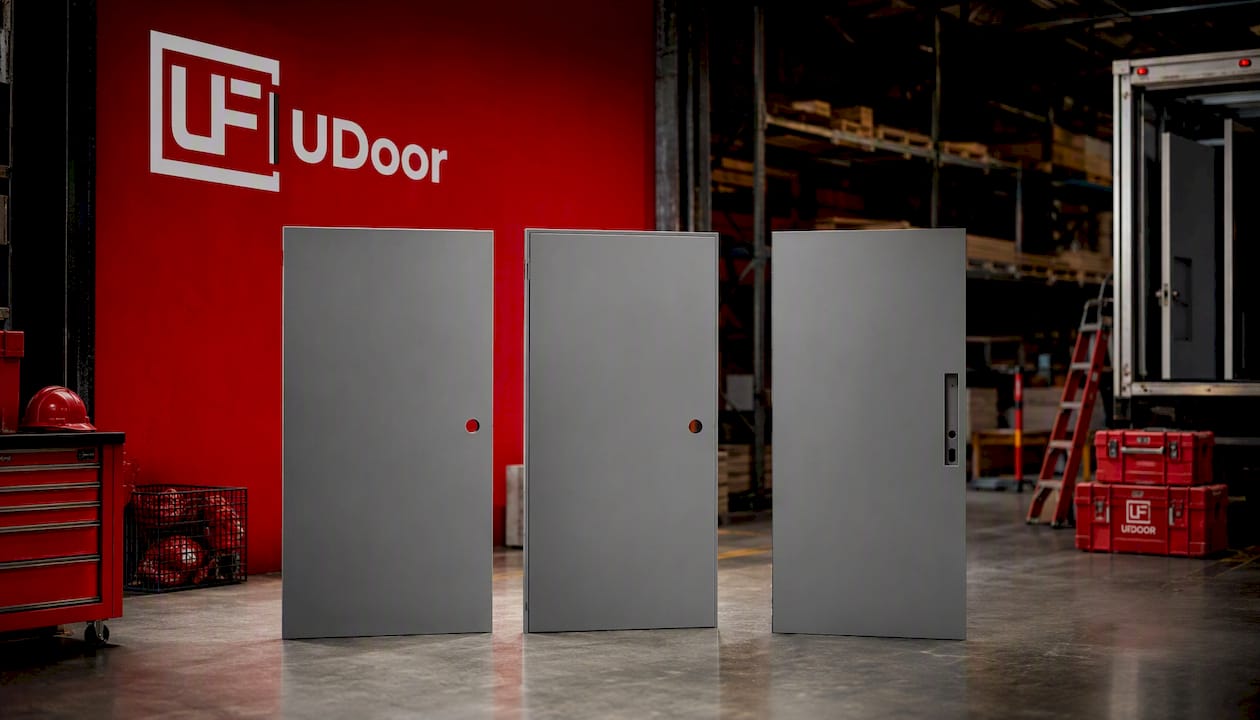
Start by requesting product data and shop drawings for the 90-minute fire-rated steel door slab or the compatible mortise lock prep slab if your opening calls for a different hardware configuration. Confirm the listing against your wall assembly, schedule installation, and request a post-installation report you can hand directly to your inspector. Browse the full door and frame catalog or reach out through the contact page to get an emergency replacement moving today.
Sources
- SECTION 08 11 13 2D HOLLOW METAL DOORS AND FRAMES
- UL 10C Fire-Rated Door Assemblies | US Made Supply
FAQ
What Does a 20-Minute Fire Rating Actually Mean?
It means the door assembly withstood standardized fire test conditions for 20 minutes without failing, under a test standard like UL 10C. It’s the lowest common hourly rating used in commercial hollow-metal doors, most often specified for corridor openings.
Can a Wood Core Door Meet a 20-Minute Rating?
Yes, wood core doors can carry a 20-minute listing, but that’s the only rating tier where wood core is acceptable in most commercial applications. Anything above 20 minutes typically requires a mineral fiberboard or other tested core material.
Does a Sprinklered Building Allow a Lower Door Rating?
Not automatically. Sprinklers can reduce required wall ratings in some jurisdictions, but that reduction doesn’t independently authorize a lower door rating without a separate code check confirmed with your AHJ.
What Happens if a Fire Door Label Is Removed or Painted Over?
An unreadable or missing label means an inspector can’t verify the door’s rating on sight, which typically fails inspection outright. The building owner then has to produce manufacturer documentation proving the door’s original listing before it’s accepted.
How Fast Can Ufdoors Deliver a Replacement Fire Door?
Ufdoors offers same-day or next-day delivery on fire-rated steel doors and frames for urgent replacement needs, paired with professional installation. Current product availability and pricing are listed on the Ufdoors site.