
Avoid Failed Inspections: Boiler Room Fire Door Rules for Facilities

Most commercial boiler rooms must be enclosed by a fire-resistance-rated assembly, including the door. Small residential boilers often fall outside that requirement. The trigger is usually equipment capacity, pressure, or fuel type, not just the presence of a boiler. Check your equipment ratings against the IBC and NFPA, then confirm with your local authority having jurisdiction before you order anything.
TL;DR:
- Most commercial boiler rooms require a fire-rated enclosure and door if equipment exceeds certain capacity, pressure, or fuel type thresholds.
- Fire doors must have a valid label, self-closing device, positive latch, and intumescent seals; unlisted modifications void the fire rating.
- Doors rated for 60, 90, or 120 minutes should match or exceed the rating of the surrounding wall to ensure compliance and safety.
- Local code amendments can alter requirements, so inspectors and authorities must be consulted for specific enclosure ratings for each project.
- Steel hollow-metal doors are standard due to their durability in hot, humid boiler room environments, and proper installation with hardware verification is crucial for compliance.
Table of Contents
- Do You Need a Boiler Room Fire Door? A Quick Checklist
- What Codes Actually Set the Rules?
- What Do Fire Door Ratings Actually Mean?
- How to Choose the Right Boiler Room Fire Door
- Installing and Maintaining a Compliant Boiler Room Fire Door
- Buying a Boiler Room Fire Door: Paperwork and Lead Times
- An Installer’s View on Boiler Room Fire Doors
- Where Ufdoors Fits Into Your Boiler Room Compliance Plan
- Sources
- FAQ
Do You Need a Boiler Room Fire Door? A Quick Checklist
Before you call a supplier or schedule an inspection, work through this list.
- Residential single-family: many jurisdictions exempt one and two-family dwellings from enclosure requirements, though multi-unit conversions often lose that exemption.
- Commercial or multi-family: expect a minimum 1-hour fire-resistance-rated enclosure, door included.
- Required door features: a permanent label, a listed self-closing device, positive latching hardware, and intumescent smoke seals.
- Paperwork to gather before inspection: the door’s test/certification label data, manufacturer installation instructions, and hardware listing sheets.
If any item above is missing or unclear for your building, treat that as a signal to escalate to your code official rather than guess.
What Codes Actually Set the Rules?
The International Building Code and NFPA standards form the baseline almost every jurisdiction builds from. Model code language commonly requires boiler and furnace rooms, aside from those in single-family dwellings, to sit inside noncombustible construction rated at a minimum of 1 hour. Once equipment crosses certain capacity or pressure thresholds, that requirement often jumps to a 2-hour enclosure.
Those thresholds aren’t arbitrary. A larger boiler holds more stored energy and burns more fuel per hour, so a failure produces a longer, hotter event. Code writers respond by demanding a longer-rated barrier around it. The exact horsepower, BTU, or pressure cutoff varies by code edition and by local amendment, so don’t assume last year’s project sets the rule for this one.
This is where local variance matters most. A city building department, like the NYC Department of Buildings, publishes its own administrative code and enforcement interpretations layered on top of the model code. Two buildings with identical boilers in different municipalities can face different door requirements. Before you spec anything, talk to your permit plan reviewer or code official directly, and get the enclosure rating for your specific equipment and occupancy in writing.
What Do Fire Door Ratings Actually Mean?
A door’s rating in minutes describes how long a labeled assembly maintains structural integrity and limits heat transfer under standardized fire test conditions. It’s not a guarantee of survival time in your specific building. It’s a comparative benchmark against other tested assemblies.
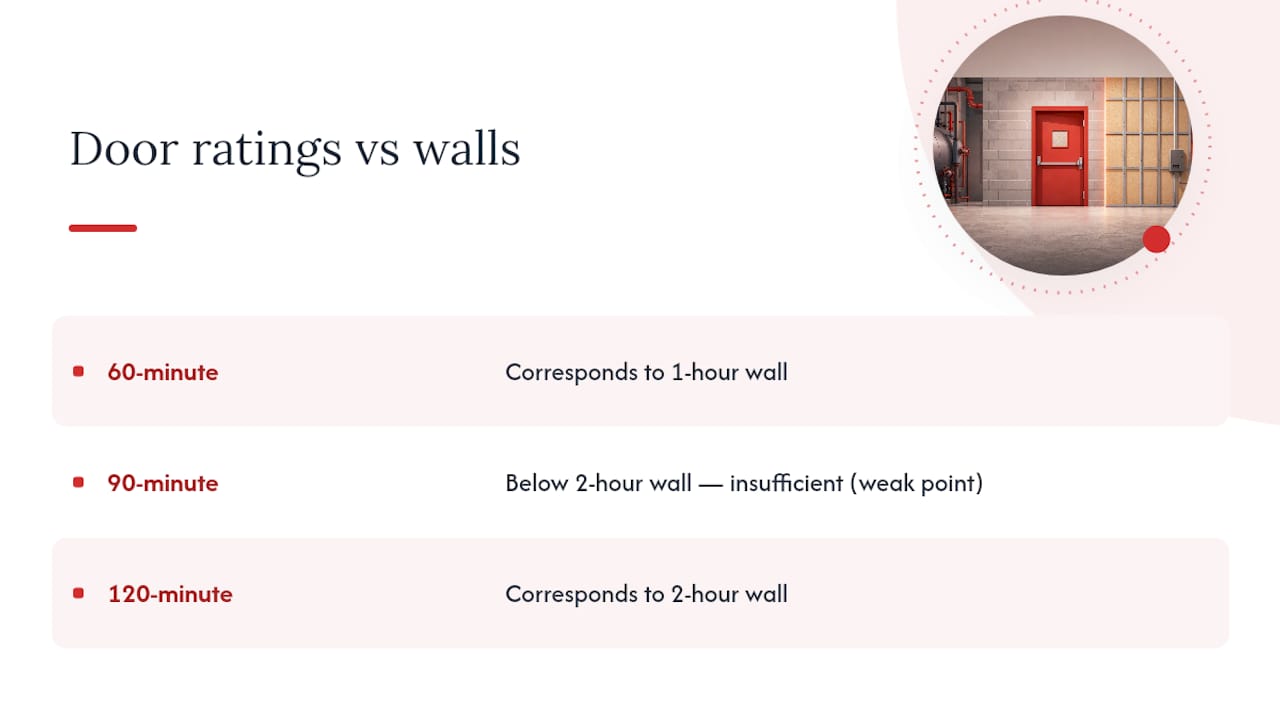
For boiler rooms, you’ll typically encounter three rating tiers: 60-minute, 90-minute, and 120-minute doors, corresponding to the 1-hour and 2-hour wall assemblies discussed above. The rule that trips up a lot of buyers: the door rating has to match or exceed what the adjacent wall or partition requires. A 90-minute door in a 2-hour wall creates a weak point that defeats the purpose of the enclosure, and it will likely fail inspection.
How to Choose the Right Boiler Room Fire Door
Steel hollow-metal fire doors dominate boiler room specifications for a practical reason: boiler rooms run hot, humid, and mechanically busy, and steel holds up to that environment far better than wood-core alternatives. Manufacturer datasheets and SDI guidance confirm steel assemblies are the standard for this occupancy type.
Your hardware checklist should include:
- A listed, self-closing door closer that isn’t disabled or blocked open.
- Positive latching hardware, not a mechanism that simply pushes shut.
- Intumescent seals and smoke gasketing rated for the assembly.
- Panic hardware only where code permits it on a rated door, and only when it carries its own fire listing.
Ventilation louvers deserve special attention. Many boiler rooms want airflow for combustion or cooling, but a standard louver cut into a rated door voids the label unless it’s a listed, fire-rated louver assembly installed per the manufacturer’s instructions.
Pro Tip: Never let a field crew cut, drill, or modify a labeled fire door slab on-site. Any unlisted alteration, including adding a vent, a viewing panel, or extra hardware prep, can void the fire rating and turn a compliant door into a liability during inspection.
Installing and Maintaining a Compliant Boiler Room Fire Door
A fire rating lives in the whole assembly, not just the slab. The door, frame, and every piece of hardware need to be installed together exactly as the manufacturer’s instructions specify, because that’s how the assembly earned its listing in testing.
During inspection, expect the AHJ to check these items in order:
- The permanent fire label is present, legible, and hasn’t been painted over or removed.
- The closer functions correctly and returns the door fully to the latched position.
- The latch engages positively without forcing or slamming.
- Smoke seals and gasketing are intact around the full perimeter.
- No unlisted field modifications, like added vents or swapped hardware, are visible.
The NFPA’s 2025 fire door guidance recommends annual functional inspections at minimum, with records kept on file for AHJ review. Common failures that trip up otherwise compliant buildings: closers propped open for convenience, vents cut after installation, unlisted replacement hardware, and door clearances that drift out of tolerance over time.
Buying a Boiler Room Fire Door: Paperwork and Lead Times
When you request a quote, ask your vendor for the test and certification report tied to the specific assembly, the labeled assembly data sheet, hardware test evidence, and full installation instructions. Keep all four on file. An AHJ inspection without this paperwork often stalls a project even when the physical door is correct.
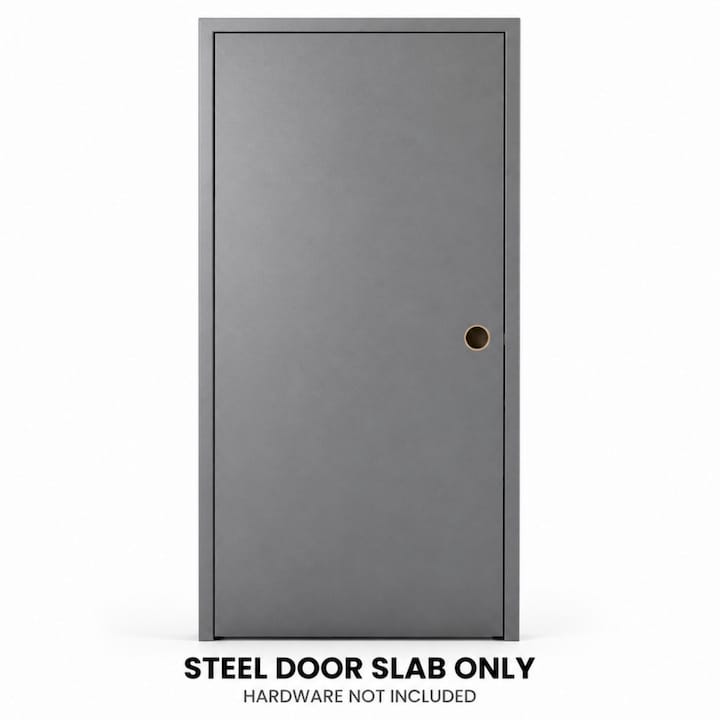
Standard steel fire doors typically ship on a multi-week lead time, but urgent replacements don’t have to wait that long. Some suppliers, Ufdoors among them, offer same-day or next-day delivery for emergency situations. When you specify a SKU, confirm the fire rating, door hand, slab size, frame type, and hardware prep match your opening exactly. Two common boiler room configurations are a 28 x 72 steel slab and a more compact 24 x 76 steel slab, both rated for 90 minutes.
An Installer’s View on Boiler Room Fire Doors
Verify the labeled assembly against the paperwork the moment it arrives at the job site, not after it’s hung. Test the closer and latch yourself before the AHJ shows up. Keep every certification document in a folder on-site, not filed away at the office.
Call a specialist when clearances are unusual, when louvers are required, or when the project might trigger a 2-hour vestibule arrangement. Those situations punish guesswork.
— Esteban
Where Ufdoors Fits Into Your Boiler Room Compliance Plan
Certain manufacturers produce and install labeled fire-rated steel doors designed for the challenging conditions a boiler room may present, often offering inspection and repair services when a door begins to slip out of compliance.
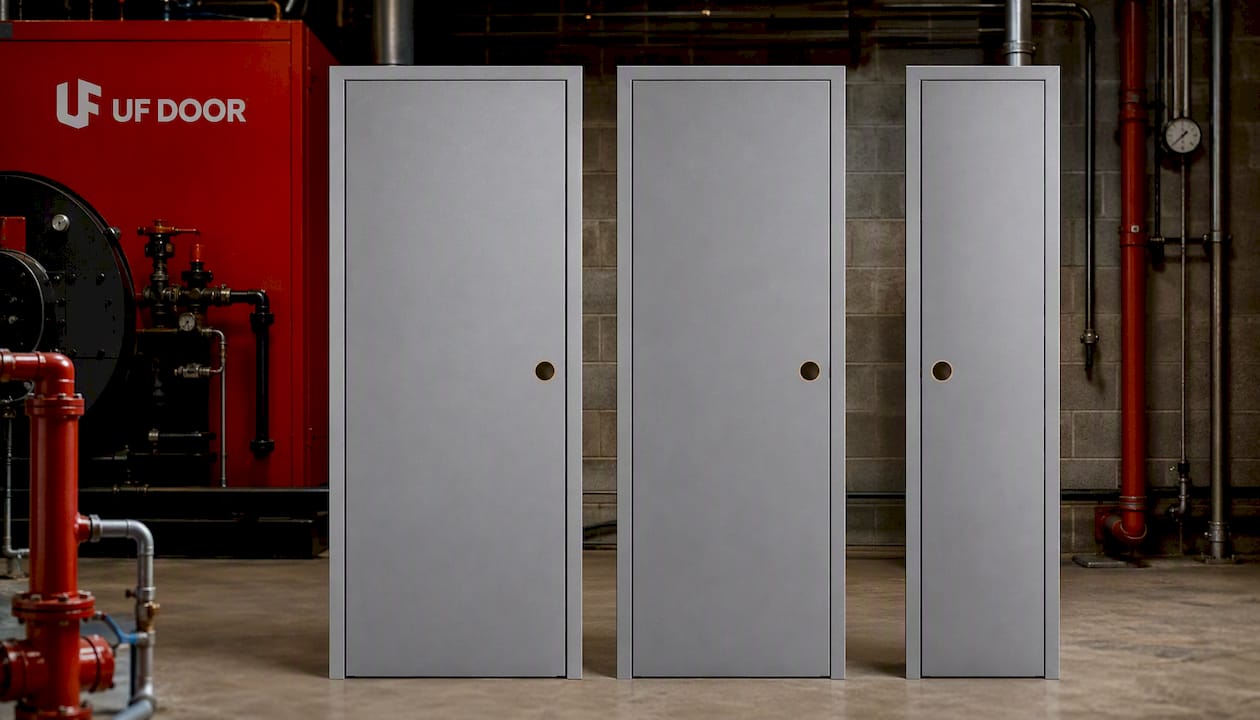
For standard boiler room openings, Ufdoors stocks 90-minute steel slabs in the sizes plant rooms most often need: the 28 x 72 left-hand slab, the matching right-hand version, and a 24 x 76 slab for tighter mechanical rooms. Every unit ships with the certification paperwork your inspector will ask for. If your existing door failed inspection or you’re facing an emergency replacement, request a quote and ask about same-day or next-day delivery. For a deeper look at how ratings and specifications work across door types, Ufdoors’ fire-rated door guide covers the details this article didn’t have room for.
Sources
FAQ
What Are the Door Requirements for a Boiler Room?
Commercial boiler rooms typically need a labeled, self-closing, positive-latching fire door rated to match the enclosure, usually 1-hour or 2-hour depending on equipment capacity and pressure.
Does a Boiler Room Need to Be Fire Rated?
Most commercial and multi-family boiler rooms need a fire-resistance-rated enclosure, but many jurisdictions exempt single-family residential boilers, so check your occupancy type and local code first.
What Are the Four Types of Fire Doors?
Fire doors are commonly grouped by rating tier: 20-minute, 60-minute, 90-minute, and 120-minute assemblies, each matched to the fire-resistance rating of the wall or partition it’s installed in.
What Is the Code for a Boiler Room?
Boiler room enclosure requirements come primarily from the International Building Code and NFPA standards, which set minimum 1-hour construction with 2-hour thresholds for larger equipment, subject to local amendments.